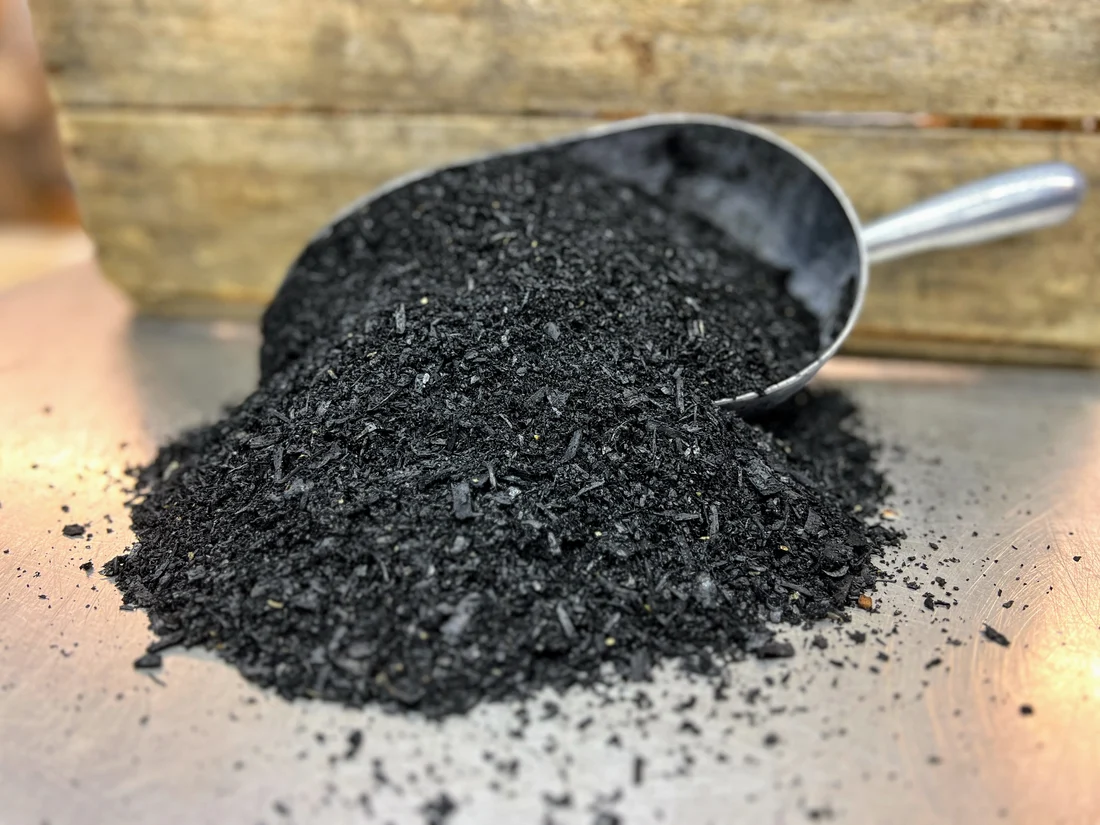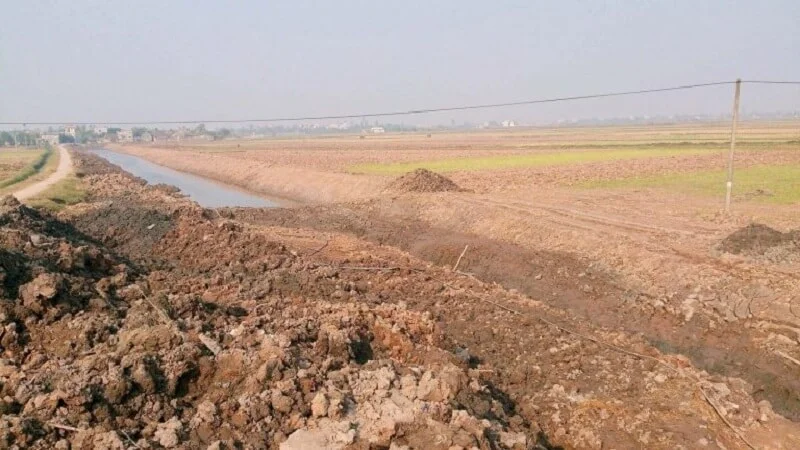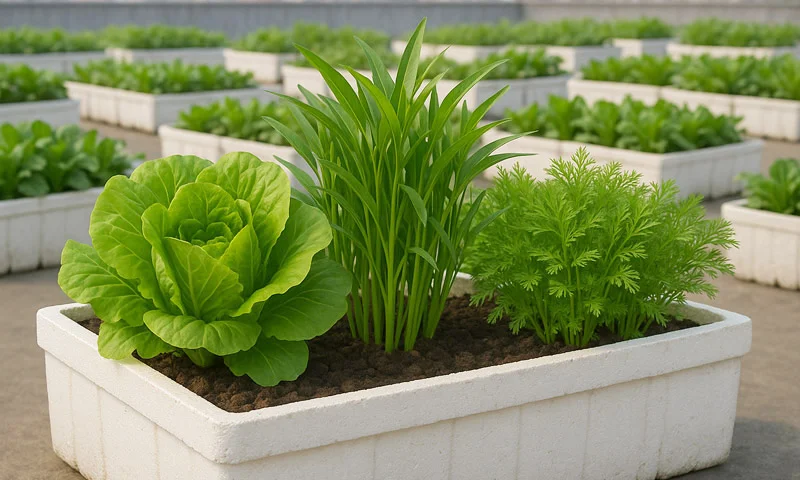
Mix vegetable-growing soil with rice husk charcoal Typically, use about 5–10% of the volume for pots and foam containers, and 0.5–2 kg/m² for garden beds, depending on the soil type. Rice husk charcoal should be sifted to remove dust and activated with well-rotted organic fertilizer for about 1–2 weeks before mixing. This is a starting point; test it on a small area, monitor the plants, and adjust as needed.
Many rooftop vegetable growers face a familiar problem: after a few harvests, the soil in the pots becomes compacted; water pools after watering, and the soil dries out and cracks after just a few hours in the sun. In the fields, small-scale farmers also notice their vegetable beds becoming increasingly depleted; they have to apply more fertilizer, yet the vegetables still grow slowly. Rice husk charcoal, also known as biochar, is an affordable and sustainable soil amendment that addresses these issues. This article will help you understand how it works, choose the right type of charcoal, mix it in the correct proportions, and avoid common mistakes.
Why does vegetable-growing soil tend to become compacted, dry, and nutrient-poor?
Potting soil and garden bed soil become compacted after several consecutive growing seasons
In pots or Styrofoam containers, the volume of soil is limited. With each watering, fine particles are washed down and gradually fill the gaps between larger particles; organic matter gradually decomposes, causing the soil to settle. As a result, the soil becomes compacted, with few air pockets, making it difficult for roots to breathe. In field beds, trampling, repeated tillage, and a lack of organic matter also lead to a similar phenomenon.
Rapid water loss during the dry season, root rot during the rainy season
The paradox with compacted soil is that it drains poorly (causing waterlogging) yet also retains water poorly during hot weather, because water flows along cracks instead of seeping evenly. Growers must water more frequently, which is labor-intensive, yet the roots still alternate between dry and wet conditions, making the vegetables prone to wilting, cracking, and root rot.
Prolonged use of chemical fertilizers weakens the soil
When relying solely on mineral fertilizers with little organic matter added, the soil tends to become acidic, the beneficial microbial community is depleted, and the fertilizer is easily leached away. Farmers often respond by applying more fertilizer, which increases costs without a corresponding increase in effectiveness.
Rice husks that are discarded or burned outdoors: Why turn them into charcoal?
In rice-growing regions such as Dong Thap, rice husk is a very abundant by-product. Open burning creates smoke and dust and releases carbon into the air; throwing it away is wasteful. Through controlled pyrolysis, husk becomes a porous, durable material that can keep carbon in the soil for many years[1]. That is why many growers are interested in rice husk charcoal as a way to make use of this by-product.

What is rice husk charcoal? How does biochar made from rice husks improve soil?
How does open-burned coal differ from pyrolyzed biochar?
Biochar is charcoal produced by pyrolysing biomass with no or limited oxygen, at temperatures above 350°C according to the EBC standard[2]; for rice husk, many kilns operate at around 450-600°C. Open-burned char is heated unevenly: some parts burn to ash, others are half-burned and full of impurities. You can read more on how to tell rice husk charcoal, rice husk ash and raw husk apart before buying or making your own.
Organizations such as the IBI (International Biochar Initiative) and EBC (European Biochar Certificate) both have standards for assessing biochar quality, including carbon content, pH and contaminants[3, 2].
Porous Structure: Sponge for Soil
Each particle of rice husk charcoal has countless tiny pores, like a sponge or honeycomb. These pores hold water and air and shelter beneficial microorganisms. When mixed into soil, the char adds durable pore space, making soil more friable and less prone to compaction over time[4].
CEC: Preventing Manure from Being Washed Away
The char surface, once ‘charged’ with nutrients and after time in contact with soil, can hold nutrient ions (cation exchange capacity, CEC) and release them gradually to roots. As a result, less fertilizer is lost with irrigation or rain[5].
Carbon sequestration in soil
Carbon in biochar decomposes very slowly, so the char can persist in soil for many years; one meta-analysis estimated about 97% of biochar carbon belongs to the stable fraction, with a mean residence time of hundreds of years[1]. For vegetable growers, this means you usually only need to mix it into the base once and top up lightly when needed.
Important note: rice husk charcoal usually has an alkaline pH, is poor in nutrients and is richer in ash and silica than char from many other feedstocks[6]. It is a soil amendment, not a fertilizer; you still need to apply organic or mineral fertilizer as usual. These parameters are easier to understand if you read 8 biochar quality indicators.
Practical Benefits of Mixing Rice Husk Charcoal into Vegetable-Growing Soil
Results depend on soil type, coal quality, dosage, and care practices, so there is no fixed improvement figure for every garden. The following benefits are commonly reported:
- Better moisture retention while still draining: friable soil may need less frequent watering, while avoiding standing water that causes root rot. Meta-analysis shows biochar increases plant-available water by about 45% in sandy soils, 21% in medium loams and 14% in clays[7].
- Less fertilizer loss: organic and mineral fertilizers stay in the root zone longer, improving fertilizer efficiency; on average, biochar reduced nitrate leaching by about 13% in pooled trials[8]. On the potential to cut nitrogen, see the article on field trials of biochar to reduce nitrogen fertilizer for a cautious view.
- Slightly raises the pH of acid soil: rice husk charcoal is usually alkaline, so it suits acid soils[9]; on soils that are already neutral or alkaline, use less or none.
- Supports root systems: a well-aerated, stable environment helps roots develop evenly. The char can also adsorb some heavy metals and toxins in soil[10], but it does not replace choosing clean soil for leafy vegetables.
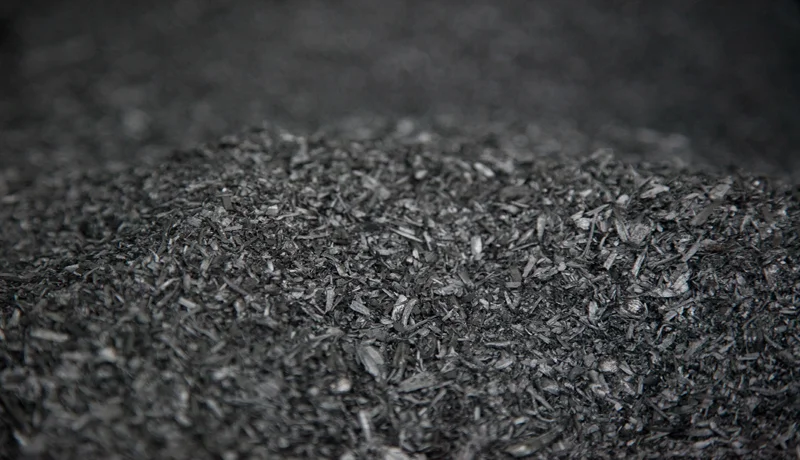
Guide to Mixing Rice Husk Charcoal with Vegetable-Growing Soil: Standard Ratios for Pots and Garden Beds
Step 1: Prepare high-quality rice husk charcoal
- Quality: Choose charcoal that is uniform in color, free of partially burned yellow rice husks, and without any acrid or chemical odors.
- Dimensions: Whole rice husk charcoal that has been used is suitable; if it contains a lot of fine dust, sift it out to prevent the soil from forming a crust.
- Humidity: Moisten the charcoal before mixing (soak or drench it, then let it drain) so that the charcoal does not absorb all the moisture from the soil and does not create dust.
Step 2: Activate the charcoal before mixing
Fresh char is like a dry sponge: if added straight to soil, it can temporarily tie up some nutrients, especially nitrogen, so many guides recommend charging the char with nutrients before application[4]. A simple method:
- Mix charcoal with well-decomposed organic fertilizer (composted manure, earthworm castings, compost) in a volume ratio of approximately 1 part charcoal to 1–2 parts fertilizer; or water the charcoal with diluted urine or a microbial preparation.
- Keep it moderately moist, shade it, and stir it thoroughly.
- Ferment for about 1–2 weeks Then mix it into the potting soil.
Steps 3 and 4: Formulas Based on the Cultivation Model
The table below provides starting points for reference; adjustments should be made based on actual circumstances:
| Cultivation Model | Ratio of coal to rice husks | Included Mixing Ingredients | Mixing depth | Notes |
|---|---|---|---|---|
| Pots, Styrofoam containers, leafy vegetables | About 5–10% of the volume | Soil, decomposed organic fertilizer, coconut coir | All growing media | Leafy greens are sensitive, so start with a low dose |
| Planters for vegetable and fruit crops (tomatoes, chili peppers, cucumbers) | About 10% of the volume | Soil, decomposed organic fertilizer, coconut coir; lime or phosphate may be added if necessary | All growing media | A long-season crop that tolerates higher yields and benefits from moisture retention |
| A bed of loam or heavy clay | About 0.5–1 kg/m² | Well-decomposed organic fertilizer; you may add compost or coconut coir | 10–20 cm | Helps keep the soil loose and improves drainage |
| A row of sandy, nutrient-poor soil | About 1–2 kg/m², spread over 2–3 harvests | Primarily decomposed organic fertilizer | 10–20 cm | Conserve water and fertilizer; do not apply all the fertilizer at once |
With a pot: For example, for a 20-liter pot, use about 1–2 liters of activated charcoal; the rest should be loose soil, compost, and coconut coir. Mix thoroughly, then water thoroughly, and let the mixture settle for a few days before sowing or planting.
For raised beds: Spread the activated charcoal evenly over the surface of the raised bed, then dig or till it in thoroughly to a depth of 10–20 cm, after which you should form the raised bed and water it. To put this into perspective, 1 kg/m² is equivalent to about 10 metric tons/hectare, so for larger areas, you should consider dividing the application into smaller doses over multiple growing seasons. For more information on combining activated charcoal with organic fertilizer, see the article Formulas for the ratio of biochar to organic fertilizer for each type of plant.
Testing Principles: Divide the area into 2–3 pots or a small section of the bed, using a different charcoal ratio in each and including a control section without charcoal. Monitor leaf color, growth rate, and soil moisture for 3–4 weeks, then select the appropriate level.
If you need pre-packaged biochar for your home garden, BiocharVN has 5-kg bags of biochar made from rice husks for home gardens and rooftop vegetable gardens, suitable for testing with a small number of pots.
Common Mistakes and Important Considerations When Using Rice Husk Charcoal for Vegetable Gardening
Use raw, unactivated charcoal
- Signs: The older leaves are pale yellow, and the plant grows slowly after the charcoal is mixed in.
- Reason: Coal can temporarily retain some nitrogen, causing the plants to become nitrogen-deficient.
- Solution: Apply small, frequent doses of well-decomposed organic fertilizer or organic nitrogen; for subsequent applications, be sure to mix charcoal with the fertilizer before blending.
Overdosing
- Signs: The soil is dry and light-textured; the plants have yellowing leaves due to a deficiency in micronutrients, and the measured pH is higher than the optimal range for vegetables (typically around 6–7).
- Solution: Add soil and compost to reduce the coal content, leach out excess alkalinity if the soil is alkaline, and keep the dosage within the recommended range.
Do not check the pH
Rice husk charcoal is typically alkaline, so take special care with neutral or alkaline soil. You can measure the soil pH and the pH of the charcoal (soak the charcoal in water at a 1:5 ratio, let it sit for a few hours, then measure) using a pH meter or pH test strips. If the soil pH is already 7 or higher, reduce the dosage or consider not using it.
Using rice husk ash or charcoal of unknown origin
Rice husk ash, partially burned rice husks, or charcoal made from trash, mixed materials, paint, or chemicals may contain impurities and toxins, posing a significant risk to leafy vegetables. Choose pyrolytic charcoal from a verified source. To learn which raw materials are best for charcoal, you can read more about Co-pyrolysis of rice husks and wood.
Frequently Asked Questions (FAQ)
What is the appropriate amount of rice husk charcoal to mix into a 20-liter vegetable planter?
Typically, about 1–2 liters of activated charcoal, corresponding to 5–10% of the volume. For leafy greens, start with a low dose; for fruiting vegetables, a higher dose may be used. Adjust the amount after monitoring the plants for a few weeks.
Can rice husk charcoal be used as a substitute for fertilizer?
No. Rice husk charcoal is a soil conditioner; it has a low nutrient content and is not sufficient to nourish plants. You still need to apply composted organic fertilizer or mineral fertilizer; the charcoal simply helps retain water and hold nutrients more effectively.
How often should rice husk be added, and does it need to be mixed in again each growing season?
Usually, mixing it in just once is sufficient because charcoal is long-lasting in the soil. For subsequent crops, add only a small amount if the soil has depleted or shows signs of becoming compacted again; avoid applying too much at once.
Is there a difference between using rice husk charcoal for leafy vegetables and fruiting vegetables?
Yes. Leafy vegetables have shallow root systems and are more sensitive to pH, so a lower concentration should be used—about 5–10% by volume. Fruiting vegetables are long-season crops; they can typically tolerate a concentration of about 10% and benefit significantly from the soil’s ability to retain moisture and nutrients.
Summary and Practical Tips for Mixing Vegetable-Growing Soil with Rice Husk Charcoal
- Pots, Styrofoam containers: about 5–10% of the volume; bed: About 0.5–2 kg/m², depending on whether the soil is loam or sandy, and work it into the soil to a depth of 10–20 cm.
- 5-Step Checklist: Select clean charcoal and pyrolyze it properly; activate it for 1–2 weeks with compost; measure the pH of the soil and the charcoal; conduct a small-scale trial mix; monitor the plants and make adjustments.
- Use in moderation; do not use raw charcoal, rice husk ash, or charcoal of unknown origin.
- Charcoal is a soil conditioner; it is not a substitute for fertilizer.
Beginners should start with a few pots before expanding to the entire garden. If you need rice husk biochar for testing, BiocharVN offers biochar made from rice husks produced in Dong Thap; you can contact them for advice on the type of biochar and the appropriate dosage for your soil and vegetable varieties. To see more application rates for various plant groups, you can read A Comprehensive Guide to Biochar Application Rates and Methods.
References
- Wang, J., Xiong, Z., Kuzyakov, Y. (2016). Biochar stability in soil: meta-analysis of decomposition and priming effects. GCB Bioenergy, 8(3), 512–523. doi:10.1111/gcbb.12266
- Carbon Standards International (2025). European Biochar Certificate (EBC) – Guidelines for a Sustainable Production of Biochar, version 10.5E, 14 August 2025. Frick, Switzerland. View source
- International Biochar Initiative. Standardized Product Definition and Product Testing Guidelines for Biochar That Is Used in Soil, version 2.1. View source
- Joseph, S., Cowie, A.L., Van Zwieten, L. et al. (2021). How biochar works, and when it doesn't: A review of mechanisms controlling soil and plant responses to biochar. GCB Bioenergy, 13(11), 1731–1764. doi:10.1111/gcbb.12885
- Liang, B., Lehmann, J., Solomon, D. et al. (2006). Black carbon increases cation exchange capacity in soils. Soil Science Society of America Journal, 70(5), 1719–1730. View source
- Asadi, H., Ghorbani, M., Rezaei-Rashti, M. et al. (2021). Application of Rice Husk Biochar for Achieving Sustainable Agriculture and Environment. Rice Science, 28(4), 325–343. View source
- Razzaghi, F., Obour, P.B., Arthur, E. (2020). Does biochar improve soil water retention? A systematic review and meta-analysis. Geoderma, 361, 114055. doi:10.1016/j.geoderma.2019.114055
- Borchard, N., Schirrmann, M., Cayuela, M.L. et al. (2019). Biochar, soil and land-use interactions that reduce nitrate leaching and N2O emissions: A meta-analysis. Science of the Total Environment, 651, 2354–2364. doi:10.1016/j.scitotenv.2018.10.060
- Dai, Z., Zhang, X., Tang, C. et al. (2017). Potential role of biochars in decreasing soil acidification – A critical review. Science of the Total Environment. doi:10.1016/j.scitotenv.2016.12.169
- Ahmad, M., Rajapaksha, A.U., Lim, J.E. et al. (2014). Biochar as a sorbent for contaminant management in soil and water: A review. Chemosphere, 99, 19–33. doi:10.1016/j.chemosphere.2013.10.071