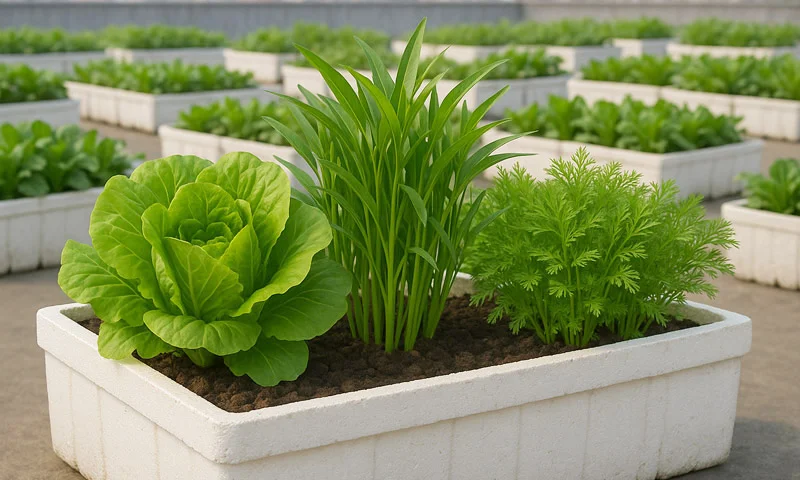
Biochar for Citrus Trees It should be used as a soil amendment, not as a fertilizer. When planting new trees, mix about 5–10% by volume of nutrient-enriched biochar into the soil in the planting hole. For fruiting trees, dig a trench around the edge of the canopy, spread the biochar mixed with organic fertilizer, and then cover it with soil. This method helps make the soil in the root zone more porous, improving moisture retention and nutrient retention, though effectiveness depends on soil type, biochar quality, and application rate. This article walks you through each step: the mechanism, benefits, application rates, a comparison of the two methods, and common mistakes to avoid.
Why Is It Getting Harder to Care for Citrus Orchards?
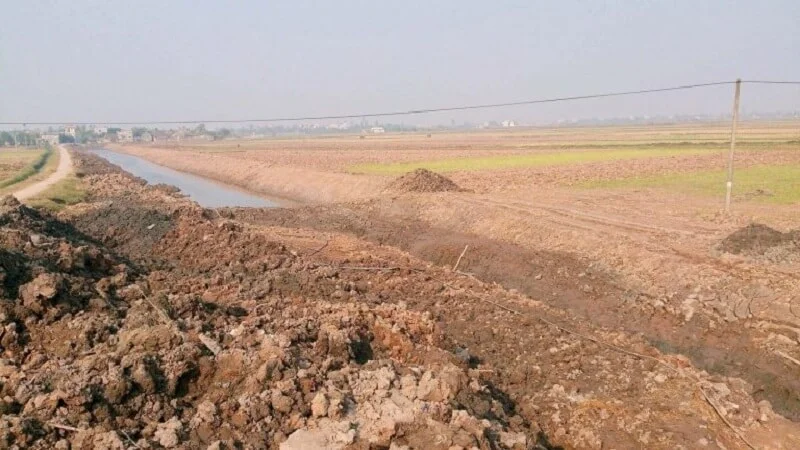
Acidic, compacted, and organic-matter-deficient soil after many years of intensive farming
Oranges, tangerines, pomelos, and lemons have shallow, sensitive root systems, so compacted or organic-matter-deficient soil immediately affects the trees’ health. According to a report by the Ministry of Agriculture and Environment cited by the press, nearly 40% of Vietnam’s agricultural land is currently degraded.[1]. Studies in intensively farmed areas in China have also documented significant soil acidification resulting from prolonged, heavy application of nitrogen fertilizer[2]. For citrus trees, the appropriate pH range is typically 5.5–6.5. Soil that is too acidic weakens the roots and reduces their ability to absorb certain nutrients.
Leaf yellowing, root rot, and waterlogging
Gardens planted in heavy, poorly drained soil are prone to yellowing leaves and root rot, especially during the rainy season. When roots lack oxygen, they absorb nutrients poorly, making them susceptible to fungal infections in the root zone, and the plants gradually decline even with adequate fertilization. The root cause is usually the soil structure, not a lack of fertilizer.
Fertilizer costs are rising, and fertilizers are prone to leaching
Fertilizer prices rose sharply in 2022 following the Russia–Ukraine conflict[3]. In sandy, gray, or acidic soils, nitrogen and potassium are easily leached from the root zone by water, so some of the fertilizer does not reach the plants.
Drought, Salinity, and Irrigation Water Shortages
In the Mekong Delta and the Central Highlands, the prolonged dry season is forcing farmers to irrigate more frequently, while water sources are becoming increasingly scarce. These pressures have sparked interest in biochar as a long-term soil improvement solution—provided it is used correctly.

What Is Biochar and How Does It Affect Soil in Citrus Cultivation?
Distinguishing biochar from charcoal, rice husk ash, and activated carbon
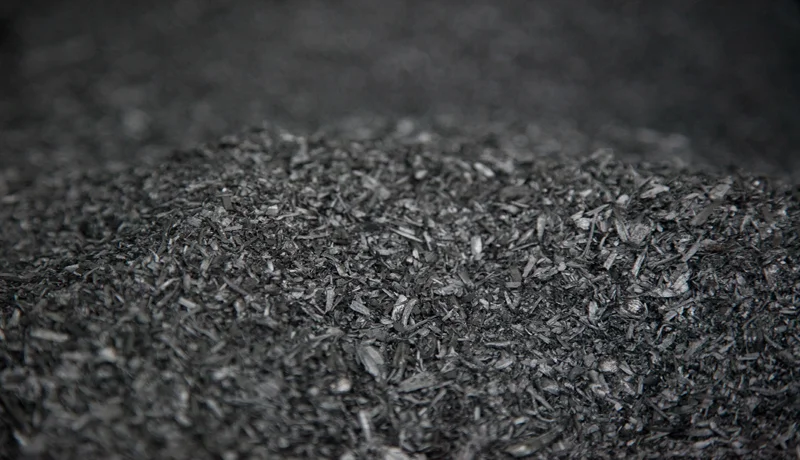
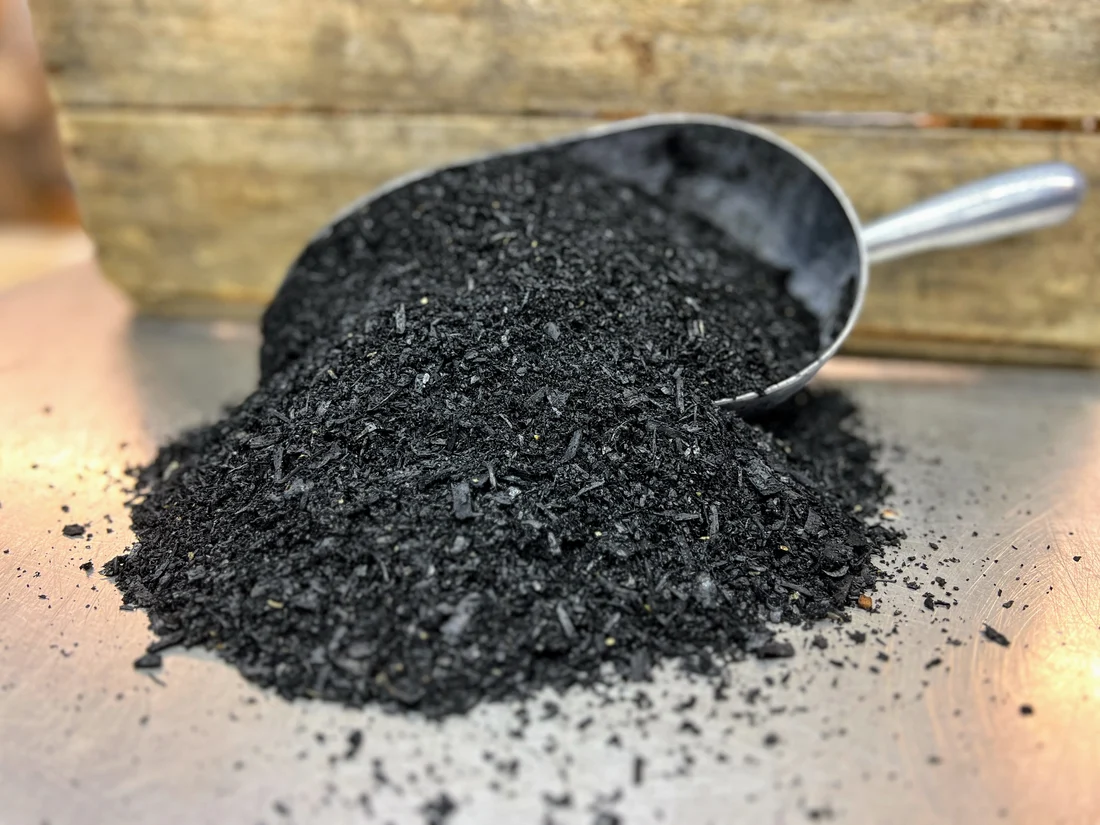
Biochar is charcoal produced by pyrolyzing biomass—such as rice husks, coconut shells, and wood—under oxygen-deprived conditions, typically at temperatures ranging from 450–600°C, and then applied to the soil as a fertilizer. Charcoal is commonly used as a fuel. Rice husk ash is the ash remaining after complete combustion, containing little stable carbon. Activated carbon is further processed for use in filtration. The pyrolysis temperature and feedstock determine the pH, ash content, and porosity of biochar.[4]. You can read more about the platform in the article What Is Biochar? A Scientific Explanation of Its Benefits for Soil and Crops.
Porous structure: sponge-like material that holds water, nutrients, and microorganisms
Think of biochar as tiny sponges in the soil. Its porous structure retains water and nutrients while providing a habitat for microorganisms. Scientific studies show that this mechanism helps improve the soil’s water-holding capacity, most notably in coarse soils such as sandy soil.[5]. However, the effectiveness varies depending on the soil type and biochar, and a positive response is not guaranteed in every case[6].
CEC: retains nitrogen, potassium, calcium, and magnesium in the root zone
Black carbon in soil can increase cation exchange capacity (CEC)—that is, the ability to retain positive ions such as ammonium, potassium, calcium, and magnesium[7]. For citrus trees, this is a significant advantage because their shallow roots absorb nutrients only from the topsoil, where nutrients are easily leached away.
Carbon Sequestration: Long-Term Benefits for Perennial Crops
Biochar is much more stable than fresh organic matter in the soil[8]. Therefore, in perennial orchards, a single application of the correct dose can remain effective for multiple growing seasons, whereas manure or compost breaks down more quickly. The phenomenon of Terra Preta—the black soil of the Amazon, rich in carbon and maintaining its fertility for centuries—is often cited as an example[9]. Important Note: Biochar is not a fertilizer, it contains very few easily digestible nutrients.
The Practical Benefits of Biochar for Citrus Trees
Better moisture retention, reduced irrigation pressure during the dry season
A meta-analysis on water retention shows that biochar generally increases the amount of available water in the soil, and the extent of this increase depends on soil texture[5]. With sandy or gray soils in the Southeast, you may notice that the soil dries out more slowly after watering. With heavy clay soils, the water-retention benefits are often less noticeable, while the benefits in terms of soil porosity may be more significant. The detailed mechanism is explained in the article Biochar: Mechanisms for Water Retention, Fertilization, and Raising Soil pH.
Minimize leaching and use fertilizer more effectively
A meta-analysis found that biochar can reduce nitrate leaching, with the extent of reduction varying by soil type and land use.[10]. Another meta-analysis showed that biochar alters the nitrogen cycle in the soil, so it should be used in combination with organic fertilizer or NPK rather than applied alone[11]. At that point, you may want to consider gradually reducing the amount of fertilizer after monitoring the plants for at least one growing season; you should not cut back drastically right away.
Raise the pH of acidic soil to an appropriate level
Biochar is slightly alkaline to alkaline, so it can reduce soil acidity[12]. A recent global meta-analysis also supports this potential[13]. The increase in pH depends on the initial pH, the soil’s buffering capacity, and the properties of the biochar. For acid sulphate soils and gray acidic soils, a reasonable target is to bring the pH to the range of 5.5–6.5, along with lime application or irrigation improvements if necessary.
Adsorption of heavy metals, improvement of the microbial ecosystem
Biochar can adsorb certain pollutants and reduce the bioavailability of heavy metals in the soil[14, 15]. A meta-analysis also found that biochar typically increases soil microbial biomass in field experiments[16]. In terms of yield, biochar generally performs better in acidic, CEC-poor tropical soils[17]. A review of 26 meta-analyses also showed that efficacy varied greatly depending on the conditions[18]. Therefore, do not expect an absolute increase in yield. Instead, expect better soil and healthier plants under proper management conditions.

Step-by-Step Guide to Applying Biochar to Citrus Trees: Around the Canopy and Mixed into the Planting Hole
Preparation: Select biochar and apply nutrients
- Selecting biochar: Prioritize biochar with a clearly identified feedstock (such as rice husks), produced through clean pyrolysis, and for which pH, EC, and heavy metal data are available. Standards such as IBI and EBC specify testing criteria for heavy metals and PAHs.[19, 20].
- Particle size: Particles ranging from a few millimeters to about 1 centimeter mix easily with the soil. Powder that is too fine tends to blow away and can cause the soil to become compacted if applied in thick layers.
- Applying biochar: Mix biochar with well-rotted manure or compost, keep it moist, and let it ferment for a few days to 2–3 weeks before applying. Many studies have shown that using biochar in combination with compost yields better results than using it alone.[21], and when added to the composting process, biochar also affects the quality of the compost[22, 23].
Mix biochar into the seedling planting hole
Recommendations from BiocharVN (should be adjusted based on soil type and the manufacturer’s recommendations):
- Dig a hole approximately 60 × 60 × 60 cm (or 80 × 80 × 60 cm in heavy soil). Keep the topsoil and subsoil separate.
- Mix the topsoil with biochar (about 5–10% by volume, equivalent to 1–3 kg per hole) and well-decomposed organic fertilizer.
- Place the mixture into the hole, with the topsoil on top, and avoid allowing the compost and biochar to come into direct contact with the roots.
- Plant the tree so that the root collar is level with or slightly above the ground, especially in low-lying areas prone to waterlogging. Fill in the soil and water thoroughly. It is recommended to build a mound to improve drainage.
Apply biochar around the canopy of fruiting trees
- Determine the canopy edge (canopy projection), where the absorbing roots are concentrated.
- Dig a semicircular or curved trench about 20–30 cm wide and about 15–20 cm deep. Alternate the side of the trench each year to avoid cutting too many roots.
- Spread the biochar mixture blended with organic fertilizer, mix it gently into the excavated soil, and then backfill the area.
- Cover with straw or dry grass, and water thoroughly so that the biochar and fertilizer can begin to work.
Reference Dosage Table
The numbers below are Recommendations from BiocharVN, for pre-loaded rice husk biochar; this is not a mandatory threshold. To compare with formulas for other crops, see also Ratios of biochar and organic fertilizer for each type of plant.
| Category | Mix into the planting hole | Fertilize around the canopy |
|---|---|---|
| Target Audience | Newly planted seedlings | A 1–3-year-old plant; a fruit-bearing plant |
| Biochar dosage | 1–3 kg per hole | 0.5–2 kg per tree (1–3 years old); 2–5 kg per tree (bearing fruit) |
| Mixing ratio | About 5–10% of the volume of the planting hole | Mix with organic fertilizer; the recommended ratio is 1 part biochar to 1–3 parts compost (by volume) |
| Depth, location | Mix thoroughly in the pit, primarily in the 0–40 cm layer | A 15–20 cm deep trench at the edge of the canopy |
| Time | 1–2 weeks before planting, at the start of the rainy season | After harvest or at the start of the rainy season |
| Frequency | One time while planting | Every 1–2 years, gradually reduce the amount as the soil improves |
| Note | Avoid letting the roots come into contact with uncomposted manure | Do not apply fertilizer directly at the base of the plant; adjust according to pH and soil type. |
At a density of approximately 400 trees per hectare, a rate of 2–5 kg per tree is equivalent to approximately 0.8–2 metric tons per hectare per application. Sandy soils or soils low in organic matter may use the upper end of this range, while soils rich in organic matter or with high pH should use the lower end.
Quick Checklist Before Fertilizing
- The soil pH is known, as well as the pH and EC of the biochar, if applicable.
- The biochar has been added and is moist; do not apply it dry.
- Apply fertilizer away from the base of the plant, right at the edge of the canopy, and cover with soil after spreading.
- Water lightly and evenly after applying the fertilizer to settle the mixture.
- Record the date of application and the dosage, and monitor the pH, moisture content, and leaf color after 1–2 months.
Common Mistakes When Using Biochar for Citrus Trees
Application of raw biochar, without added nutrients
Signs: The plant grows slowly, and its leaves lose their color after a few weeks. Reason: Raw biochar can adsorb nutrients in the soil and temporarily make nitrogen unavailable to plants.[6]. Solution: Mix biochar with organic fertilizer before use; add a small amount of nitrogen fertilizer if the plants show signs of deficiency.
Over-fertilizing or applying fertilizer too close to the base of the plant
Signs: Yellowing of the leaves along the veins, especially on young leaves, is a sign suggesting a deficiency in iron, zinc, and manganese. Reason: Biochar increases pH, and a pH that is too high reduces the availability of certain micronutrients. The extent of the increase depends on the soil and the biochar.[12]. Solution: Stop applying additional fertilizer, measure the pH, apply chelated micronutrients via foliar feeding, and apply slightly acidic organic fertilizer. Next time, reduce the dosage and apply the fertilizer away from the base of the plant.
Failure to test soil pH and biochar quality
High-temperature pyrolyzed biochar typically has a higher pH and ash content[4], so it is not suitable for neutral or alkaline soils. Biochar of unknown origin also poses risks related to heavy metals and PAHs. Be sure to request information on raw materials, pyrolysis temperature, and test results. Article What is the optimal C/N ratio? It also helps readers understand the basic specifications.
Fertilizing at the wrong time, without integrating water and fertilizer management
Applying biochar when the soil is too dry or just before a prolonged period of heavy rain reduces its effectiveness. Biochar is no substitute for good drainage, pruning, pest and disease management, and balanced fertilization. It merely improves the soil so that these measures are more effective.
Frequently Asked Questions (FAQ)
How many kilograms of biochar should be applied to each orange, grapefruit, tangerine, or lemon tree?
According to BiocharVN’s recommendations, use approximately 0.5–2 kg per tree for 1–3-year-old trees and 2–5 kg per tree for fruiting trees, mixed with organic fertilizer. Use a higher rate for sandy soil, and a lower rate for soil rich in organic matter or with a high pH. Start with a low dose and monitor the plants.
Applying fertilizer around the tree canopy or mixing it into the planting hole: Which method is more effective?
These are two different methods for two different stages, so they cannot be compared. Mix it into the planting hole when planting new trees to help the young root system develop in loose, well-aerated soil. Apply it around the canopy for trees that already have an established root system, placing the biochar in the root zone where it can be absorbed.
How long does it take to see results, and do I need to reapply it every year?
Soil porosity and moisture retention typically improve after a few weeks to a few months, while the benefits to plants are usually more evident after one or two growing seasons. Biochar is stable in the soil[8], so large annual doses are usually not necessary. You can apply a small amount every 1–2 years, depending on the results of your monitoring.
Can biochar be used together with chemical fertilizers, organic fertilizers, and microbial products?
Yes, and you should combine them. Mixing biochar with organic fertilizer or compost before application helps the biochar absorb nutrients and beneficial microorganisms.[21]. When using chemical fertilizers, it is best to reduce the application rate gradually and monitor the plants rather than cutting back abruptly. Microbial products should be mixed in when the biochar is moist and not too hot after composting.
Summary and Practical Advice
When using biochar for citrus trees, keep these three key points in mind: apply biochar before use, use it in moderation, and apply it in the right place (mix it into the planting hole when planting new trees, or apply it in trenches along the edge of the canopy for mature trees).
- Test the soil pH and request information on biochar quality before purchasing.
- Conduct small-scale trials (a few dozen trees or a single plot) before scaling up.
- Monitor pH, moisture levels, leaf color, and growth 1–2 months after application.
- Combine water management, fertilizer application, and root zone disease prevention.
Suggested 30-day plan: Week 1—measure pH and select test plots; Week 2—apply biochar mixed with organic fertilizer; Week 3—fertilize and water; Week 4—record leaf data and soil moisture. If you’d like to try it, BiocharVN provides rice husk biochar produced in Dong Thap, for example 20-kg bags of biochar made from rice husks for fruit orchards, and can recommend the appropriate dosage based on your soil type.
References
- Diệu Hoa (2026). Nearly 40% of agricultural land is degraded. Vietnam Financial Times, May 5, 2026 (based on data from a report by the Ministry of Agriculture and Environment). See document
- Guo, J.H., Liu, X.J., Zhang, Y., et al. (2010). Significant acidification in major Chinese croplands. Science, 327(5968), 1008–1010. doi:10.1126/science.1182570
- Federal Reserve Bank of St. Louis (2023). The Impact of the Russia-Ukraine War on Fertilizer Prices in 2022. On the Economy, April 4, 2023. View document
- Ippolito, J.A., Cui, L., Kammann, C., et al. (2020). Feedstock choice, pyrolysis temperature, and type influence biochar characteristics: a comprehensive meta-data analysis review. Biochar, 2(4), 421–438. doi:10.1007/s42773-020-00067-x
- Razzaghi, F., Obour, P.B., Arthur, E. (2020). Does biochar improve soil water retention? A systematic review and meta-analysis. Geoderma, 361, 114055. doi:10.1016/j.geoderma.2019.114055
- Joseph, S., Cowie, A.L., Van Zwieten, L., et al. (2021). How biochar works, and when it doesn't: A review of mechanisms controlling soil and plant responses to biochar. GCB Bioenergy, 13(11), 1731–1764. doi:10.1111/gcbb.12885
- Liang, B., Lehmann, J., Solomon, D., et al. (2006). Black carbon increases cation exchange capacity in soils. Journal of the Soil Science Society of America, 70(5), 1719–1730. See the reference
- Wang, J., Xiong, Z., Kuzyakov, Y. (2016). Biochar stability in soil: a meta-analysis of decomposition and priming effects. GCB Bioenergy, 8(3), 512–523. doi:10.1111/gcbb.12266
- Glaser, B., Haumaier, L., Guggenberger, G., Zech, W. (2001). The 'Terra Preta' phenomenon: a model for sustainable agriculture in the humid tropics. Natural Sciences, 88, 37–41. doi:10.1007/s001140000193
- Borchard, N., Schirrmann, M., Cayuela, M.L., et al. (2019). Biochar, soil, and land-use interactions that reduce nitrate leaching and N₂O emissions: A meta-analysis. Science of the Total Environment, 651, 2354–2364. doi:10.1016/j.scitotenv.2018.10.060
- Liu, Q., Zhang, Y., Liu, B., et al. (2018). How does biochar influence the soil nitrogen cycle? A meta-analysis. Plants and Soil, 426(1–2), 211–225. doi:10.1007/s11104-018-3619-4
- Dai, Z., Zhang, X., Tang, C., et al. (2017). The potential role of biochars in reducing soil acidification—A critical review. Science of the Total Environment. doi:10.1016/j.scitotenv.2016.12.169
- Zhang, N., Xing, J., Wei, L., et al. (2025). The potential of biochar to mitigate soil acidification: a global meta-analysis. Biochar, 7. doi:10.1007/s42773-025-00451-5
- Ahmad, M., Rajapaksha, A.U., Lim, J.E., et al. (2014). Biochar as a sorbent for contaminant management in soil and water: A review. Chemosphere, 99, 19–33. doi:10.1016/j.chemosphere.2013.10.071
- Chen, D., Liu, X., Bian, R., et al. (2018). Effects of biochar on the availability and plant uptake of heavy metals—A meta-analysis. Journal of Environmental Management. doi:10.1016/j.jenvman.2018.05.004
- Kumar, Y., Ren, W., Tao, H., Tao, B., Lindsey, L.E. (2025). Impact of biochar application on the enhancement of soil microbial biomass carbon in field experiments: a meta-analysis. Biochar, 7, 2. doi:10.1007/s42773-024-00391-6
- Jeffery, S., Abalos, D., Prodana, M., et al. (2017). Biochar boosts tropical but not temperate crop yields. Environmental Research Letters, 12(5), 053001. doi:10.1088/1748-9326/aa67bd
- Schmidt, H.-P., Kammann, C., Hagemann, N., et al. (2021). Biochar in agriculture – A systematic review of 26 global meta-analyses. GCB Bioenergy, 13(11). doi:10.1111/gcbb.12889
- International Biochar Initiative. Standardized Product Definition and Product Testing Guidelines for Biochar Used in Soil, version 2.1. See the documentation
- Carbon Standards International (2025). European Biochar Certificate (EBC) – Guidelines for the Sustainable Production of Biochar, Version 10.5E, August 14, 2025. Frick, Switzerland. See documentation
- Agegnehu, G., Srivastava, A.K., Bird, M.I. (2017). The role of biochar and biochar-compost in improving soil quality and crop performance: A review. Applied Soil Ecology, 119, 156–170. See the reference
- Sanchez-Monedero, M.A., Cayuela, M.L., Roig, A., et al. (2018). The Role of Biochar as an Additive in Organic Waste Composting. Bioresource Technology, 247, 1155–1164. doi:10.1016/j.biortech.2017.09.193
- Zou, J., Hua, Y., Cheng, Y., et al. (2025). A holistic assessment of the effects of biochar amendment on compost maturation: a meta-analysis. Biochar X, 1, e005. doi:10.48130/bchax-0025-0005