Rice fields with golden leaves and black roots, and water with a red film on the surface at the start of the rainy season, are a familiar sight in areas with acidic soil. Remediating Acidic Soil with Biochar This method uses biochar to raise the pH, reduce soluble aluminum and iron, and improve soil structure. The effects are more sustainable when combined with leaching, water management, low-dose lime application, and organic fertilizer. This article covers the causes of aluminum toxicity, the mechanism of biochar, a 5-step process, a reference dosage chart, and common mistakes to avoid.
The Reality of Acidic Soils: Why Are Yields Low and Costs High?
Acidic soils account for a significant portion of the cultivated land in the Mekong Delta, particularly in the Dong Thap Muoi region, the Long Xuyen Quadrangle, and the Ca Mau Peninsula. There are also localized areas of acid-sulfate soil along the Central Coast. For accurate data on the area by province, you should consult reports from the Southern Agricultural Sciences Institute or the local Department of Agriculture.
Potential acid-sulfate soils and active acid-sulfate soils
- Potentially acidic soil: The acid-generating layer containing pyrite (FeS₂) remains in anaerobic, waterlogged conditions and therefore has not yet produced acid. The soil may appear normal, but problems will arise when it dries out or is disturbed.
- Active acid-sulfate soil: Pyrite has oxidized, producing sulfuric acid. The soil typically contains a layer of straw-yellow spots (jarosite) and has a very low pH, usually below 4.
Causes: pyrite, oxidation, and seasonal iron leaching
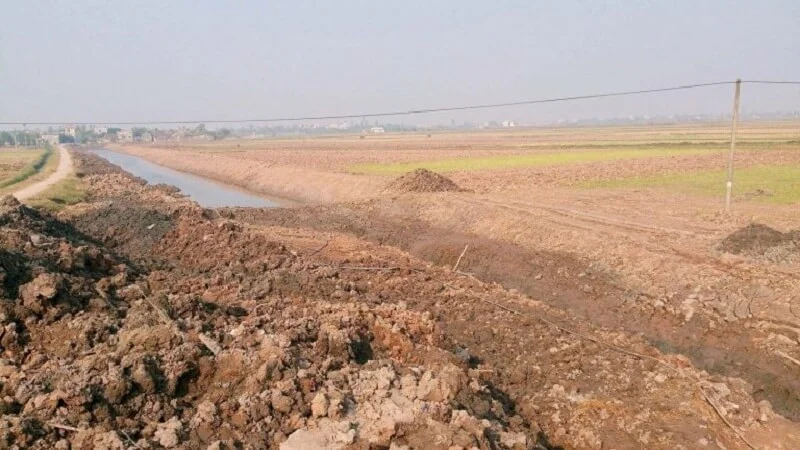
When the groundwater level drops during the dry season or when ditches are dug or ridges are formed, the pyrite layer is exposed to air and oxidizes, producing sulfuric acid along with soluble iron and aluminum. At the start of the rainy season, water carries this acid into rice fields and waterways—a phenomenon known as removing iron deposits. That is when a red film forms on the water’s surface and the crops go into shock.
Harm to crops
- Low pH causes weak roots and limits nutrient uptake.
- Dissolved aluminum (Al³⁺) and iron (Fe²⁺) At levels high enough to cause toxicity: short, blackened roots; yellow leaves; and poor branching.
- Deficiency of bioavailable phosphorus because the phosphorus is bound by aluminum and iron.
- Beneficial microorganisms are declining, and organic matter is decomposing slowly.
Limitations of Traditional Methods
Lime application, leaching, and ridge formation remain the foundation and should be retained. However, while lime acts quickly, it is easily washed away by runoff, so it must be reapplied every growing season. Leachate removal is water-intensive, labor-intensive, and dependent on a supply of fresh water. The question is whether biochar can help provide a more long-term solution.

What Is Biochar and How Does It Remediate Acidic Soil?
Biochar and the Pyrolysis Process
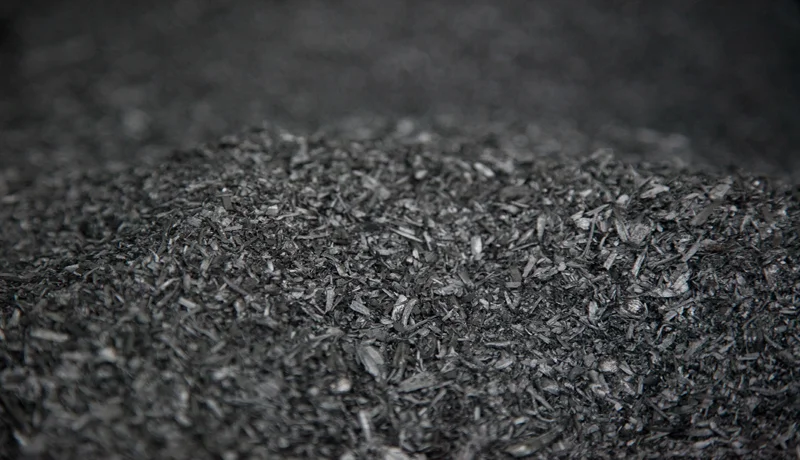
Biochar is a carbon-rich material produced by the pyrolysis of agricultural biomass—such as rice husks, coconut shells, coconut coir, wood, or straw—under oxygen-deprived conditions, typically at approximately 450–600°C. The raw materials and temperature determine the properties of the charcoal, particularly its pH, porosity, and ash content. If you're new to this concept, read more What Is Biochar and Its Practical Applications?.
Porous Structures and Microorganism Habitats
Biochar contains countless tiny pores, creating a large surface area. This structure helps retain water and nutrients while providing a habitat for beneficial microorganisms, protecting them from acidic conditions and environmental fluctuations. In heavily acidic soils, where the microbial community is already depleted, this is a significant advantage.
CEC, increases pH and reduces dissolved aluminum
Most biochar has a slightly alkaline to alkaline pH, typically 8–10 depending on the raw material and pyrolysis temperature. When introduced into the soil, charcoal helps neutralize acids, but the mechanism is not limited to that:
- Increase cation exchange capacity (CEC): The soil retains more nutrient cations such as K⁺, Ca²⁺, and Mg²⁺.
- Adsorption on surface functional groups: Charcoal can bind Al³⁺, Fe²⁺, and certain heavy metals, reducing the amount of these substances that come into contact with the roots.
- Local increase in pH: When the pH rises to about 5.0–5.5, dissolved aluminum typically decreases sharply and precipitates.
Biochar is not a magic cure. The increase in pH depends on the type of charcoal, the application rate, the soil’s buffering capacity, and the amount of acid continuously being released from pyrite.
Carbon Sequestration and Environmental Benefits
The carbon in biochar is much more stable than fresh organic matter, so it can be retained in the soil for a long time. This helps reduce greenhouse gas emissions, especially when byproducts such as rice husks are utilized instead of being burned in the fields.
The Practical Benefits of Biochar for Acidic Soils
The benefits listed below have been widely documented in scientific literature, but the specific extent varies depending on the soil, coal type, and crop. Therefore, you should conduct your own measurements on your field rather than expecting a fixed figure.
- Neutralizes acidity and reduces Al and Fe toxins: Monitor pH (water or KCl), exchangeable aluminum, dissolved iron, and EC before and after fertilization.
- Moisturizes, reduces runoff: The soil is more porous and retains water and nutrients better, which makes it possible to reduce the amount of chemical fertilizer once the soil has stabilized.
- Improving soil structure: The soil is well-compacted, the roots grow deep, and there are more lateral roots.
- Heavy Metal Fixation: partially restrict the movement of toxic metals into the plant.
A Comparison of Biochar, Lime, and Organic Fertilizer
| Criteria | Biochar | Lime | Organic fertilizer |
|---|---|---|---|
| Onset of action | Slow to moderate | Fast | Average |
| Durability | Many years | Short; usually requires reapplication each growing season | Short to medium |
| Main Effects | Absorbs Al and Fe; retains water and nutrients; provides a habitat for microorganisms | Rapid Acid Neutralization | Provides nutrients and supports microbial growth |
| Note | Choose high-quality charcoal; it needs to be enriched with nutrients. | Over-fertilizing can easily lead to soil compaction | It must be left to decompose |
The specific cost per hectare depends on the price of coal, transportation, and application rates, so please request a quote based on your actual circumstances. The most effective approach is to combine three types: quick-acting lime for the initial stage, biochar for long-term benefits, and organic fertilizer to nourish the soil.
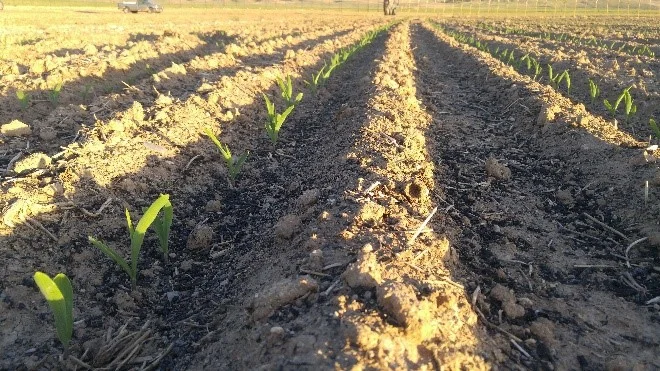
Step-by-Step Guide to Remediating Acidic Soil Using Biochar
Steps 1–2: Collect samples and assess the level of iron contamination
- Soil Sampling Collect samples from the 0–20 cm layer at 5–10 points along the diagonal of the field, and mix them thoroughly to form a representative sample. Samples should also be collected at the beginning of the rainy season to clearly assess the level of alum leaching.
- Analysis Test pH, EC, exchangeable Al³⁺, Fe²⁺, available phosphorus, and organic matter at a reputable laboratory, or seek assistance from agricultural extension officers or units within the Soil and Agricultural Chemistry Institute system. Based on the results, classify the soil as having mild, moderate, or severe acidity.
Step 3: Wash the alum and select the appropriate type of charcoal
- Soil Preparation: Clean the ditches, drain the acidic water, and flush out the iron-rich soil with fresh water (flood the area and then drain it; repeat several times if necessary). Maintain a water level high enough to prevent the pyrite layer from drying out and oxidizing further. For heavily iron-rich soil, apply lime for initial soil improvement based on the analysis results.
When choosing charcoal, keep the following in mind:
- Source: Rice husks, coconut shells, and wood are all suitable; rice husk charcoal is rich in silicon, lightweight, and readily available in rice-growing regions.
- Particle size: Medium-sized granules (about a few mm) are easy to mix and spread; fine powder is prone to blowing away but reacts more quickly.
- Quality: It should include information on pH, moisture content, carbon content, and ash content, and, ideally, be tested in accordance with IBI or EBC standards.
Step 4: Enrich the charcoal with organic fertilizer and microorganisms
- Charcoal grill: Mix biochar with decomposed organic matter, manure, or microbial preparations before application. As a general guideline, biochar should make up about 10–30% of the mixture’s volume. Let the mixture compost for 2–4 weeks, maintaining a moisture level of about 50–60%. Activated biochar helps prevent dry biochar from leaching nutrients from the plants. Detailed instructions are provided in the article. Composting organic biochar.
Step 5: Fertilize, till the soil, and monitor
- Fertilize and monitor: Spread the mixture evenly over the field surface, then plow or till it into the top 10–20 cm of soil before seeding or planting. For perennial crops, apply the fertilizer in furrows around the canopy or mix it into the planting holes. Re-test the pH and Al³⁺ levels and observe the roots and leaf color after each crop cycle, continuing this assessment for 1–3 crop cycles.
Reference Dosage Table
| Level of iron content | Initial soil pH | Biochar (metric tons per hectare) | Compound lime | Organic/Microbial Fertilizer | Crops | Frequency |
|---|---|---|---|---|---|---|
| Light | About 4.5–5.5 | 3–5 | It may not be necessary, or only very little may be needed | 2–3 metric tons of composted organic fertilizer + microorganisms | Rice, vegetables | Apply once; results last 2–3 years |
| Average | About 3.8–4.5 | 5–10 | According to the analysis results, the yield is typically a few hundred kilograms to about 1–2 metric tons per hectare | 3–5 metric tons of composted organic fertilizer + microorganisms | Rice, sugarcane, pineapple, fruit trees | Divide into 1–2 portions during the first 1–2 growing seasons |
| Heavy | Less than 3.8 | 10–15, in several installments | An initial lime application is needed based on the soil analysis | 5 metric tons or more, with strict water management | Prioritize rice, pineapple, and sugarcane that are tolerant of acidic soil; fruit trees should be planted on raised beds | Administer 2–3 times a year, adjusting the dosage based on test results |
Note: These values are for reference only for different types of alum and must be adjusted based on soil test results, coal type, crop type, and investment capacity. For more information, see Application rates and methods for applying biochar to rice, fruit trees, and vegetables. Start by testing it on a small area before expanding.
Common Mistakes When Using Biochar in Acidic Soil
Warning: Biochar is a soil conditioner, not a complete substitute for water management and fertilizers.
- Add uncharged raw coal. Dried charcoal can absorb nutrients, causing plants to experience a temporary nitrogen deficiency. Solution: Enrich the soil with organic matter, beneficial microorganisms, or a moderate amount of nitrogen fertilizer during the early stages.
- Over-fertilization or the use of charcoal with a pH that is too high. The soil may be deficient in trace minerals such as zinc, iron, and manganese. Solution: Apply in small doses, test the pH of the charcoal, and monitor the soil pH.
- No soil analysis; neglecting iron leaching and water management. Pyrite continues to produce acid if the soil dries out, so coal cannot compensate for it. Solution: Conduct soil analysis before fertilizing, maintain adequate soil moisture, and leach aluminum at the right time.
- Choose low-quality coal. Pyrolyzed coal that does not meet standards, contains impurities, or contains PAHs and heavy metals can be harmful to the soil. Solution: Request that suppliers provide test data and compare it to IBI or EBC standards. BiocharVN supplies biochar made from rice husks produced in Dong Thap and is transparent about its raw materials and specifications, making it easy for users to verify.
Frequently Asked Questions (FAQ)
How much biochar should be applied to 1 hectare of acid soil, and how long does it take to see results?
The recommended application rate is 3–15 metric tons per hectare, depending on the degree of acidity; apply in multiple applications for heavy soils. Improvements in soil structure and root development are typically observed after 1–3 growing seasons, while the increase in pH is slower than with lime but more lasting. Regular measurements of pH and Al³⁺ are necessary for adjustment.
Can biochar be used as a complete substitute for lime to reclaim acid-sulfate soil?
Complete replacement is not recommended, especially in soils with moderate to severe acidity. Lime neutralizes acidity quickly, while biochar has a slow-release and long-lasting effect. A reasonable approach is to apply lime at a low dose based on soil analysis, and then maintain soil health with biochar and organic fertilizer.
Is biochar suitable for rice, sugarcane, pineapple, and fruit trees grown on acidic soil?
This method can be applied to these groups of plants, but the fertilization techniques differ. For rice and vegetables, fertilizer is typically spread and tilled into the soil before the growing season; for sugarcane and pineapple, it is applied in furrows or holes; and for fruit trees, it is applied around the canopy or mixed into planting holes and raised beds. Heavily acidic soils still require raised beds, acid leaching, and water management.
Is the cost of retrofitting with biochar high, and is it a sound investment?
The initial cost may be higher than that of lime due to the large application rate, but since biochar lasts for many years, it does not need to be reapplied every growing season. The payback period depends on coal prices, transportation costs, and the actual reduction in fertilizer use or increase in yield. Try it on a small area and keep records to calculate the payback period.
Summary and Tips for Sustainable Acidic Soil Remediation
The remediation of acid-sulfate soils using biochar is most effective when implemented as part of a comprehensive process, rather than simply applying biochar on its own.
- First, analyze the soil and classify the acidity level as mild, moderate, or severe.
- Leach the iron, retain water to minimize pyrite oxidation, and use a low dose of lime in the early stages if necessary.
- Choose charcoal with clearly specified specifications, and enrich it with organic matter and microorganisms before applying it as fertilizer.
- Apply fertilizer according to the recommended dosage, in several applications, and work it into the top 10–20 cm of soil.
- Measure pH and monitor root growth over 1–3 growing seasons, combining crop rotation and organic fertilizer to maintain these results.
If you need to determine the quantity for a rice field or orchard, you can refer to 20-kg bags of rice husk biochar for farms and fruit orchards, or contact BiocharVN for dosage recommendations based on your soil test results.