Biochar for Water Filtration in Shrimp Ponds This solution uses porous biochar to adsorb some of the ammonia, dissolved organic matter, and heavy metals, while also serving as a substrate for nitrifying bacteria to colonize and treat nitrogen. Biochar does not replace good pond management, but when properly prepared and arranged (filter bags, recirculating filter chambers, settling ponds), it can help stabilize water quality parameters and reduce the need for water changes. This article explains the mechanism, step-by-step installation, recommended dosages, and common mistakes to avoid.
The Current State of Water Quality in Shrimp Ponds: Why Is an Additional Filter Layer Needed?
Ammonia, nitrites, H₂S, and toxic algae
In intensive ponds, excess feed and shrimp feces gradually accumulate, especially from about the middle of the growing season onward, when shrimp biomass increases and daily feed intake is high. Decomposing organic matter produces ammonia (NH3/NH4+), then convert to nitrite (NO2-) if the nitrifying microbial community has not yet had time to develop. In the anoxic bottom sludge layer, there is also the production of H2S, a toxic gas even at low concentrations. As the pH and temperature rise in the afternoon, the proportion of toxic NH3 in total ammonium nitrogen also increases, causing shrimp to grow more slowly, eat less, have weakened immunity, and become more susceptible to disease.
Unstable costs and effectiveness
Many households address this by changing the water, using probiotics, detoxifying agents, and water-improving chemicals. This method incurs recurring costs each growing season, and its effectiveness depends on weather conditions, salinity, and the quality of the water supply. Frequent water changes also increase the risk of introducing pathogens from outside and cause sudden environmental fluctuations.
Regulatory Pressure and Sustainable Aquaculture
Regulations regarding wastewater treatment, biosafety, and traceability are becoming increasingly stringent. Reducing wastewater discharge and limiting the use of chemicals are approaches that many farms must consider.
The Limitations of Traditional Filtration
Sand, rocks, and filter mesh primarily trap suspended solids. They have little effect on solvent such as ammonia, certain soluble organic compounds, or metal ions. This is where biochar can play a role, as its porous structure and chemical surface can influence both groups.
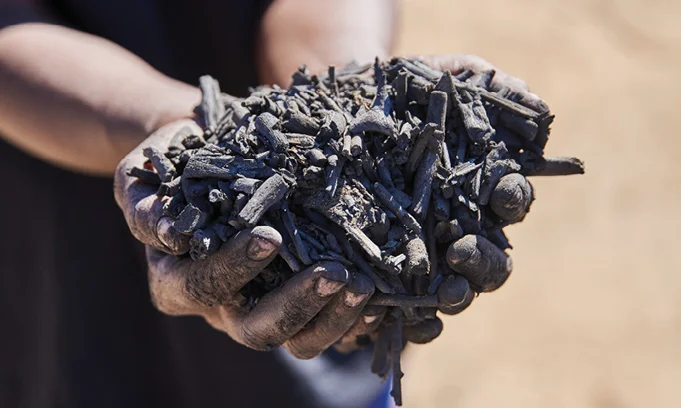
What is biochar, and how does the water filtration system in shrimp ponds work?
Distinguishing Between Biochar, Activated Carbon, Charcoal, and Rice Husk Ash
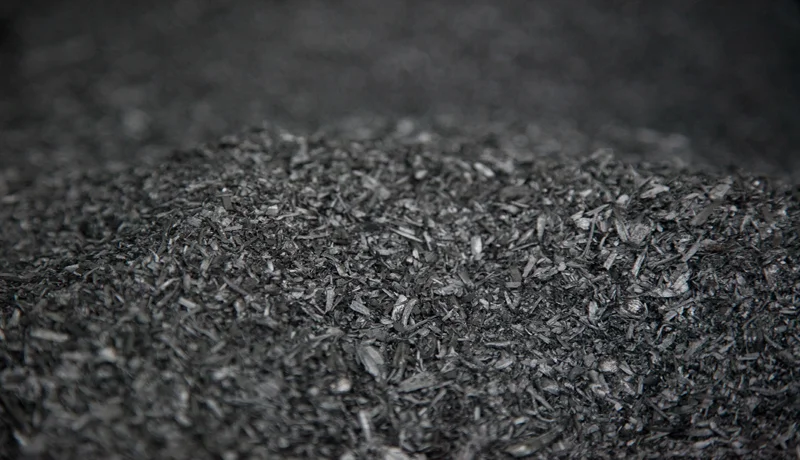
Biochar It is a carbon-rich material produced by the pyrolysis of biomass (rice husks, coconut shells, sawdust, etc.) under oxygen-deprived conditions, typically at temperatures ranging from 450 to 600°C. If you need a broader foundation of knowledge, you can read What Is Biochar and What Are Its Benefits, According to Scientific Explanations?.
- Activated carbon: is further treated (steam or chemical activation) at high temperatures to significantly increase its porosity; it is usually more expensive.
- Regular charcoal: Uncontrolled firing results in inconsistent quality and purity.
- Rice husk ash: is the portion that has been almost completely burned away, consisting mainly of silicon and minerals, with virtually no porous carbon framework remaining for adsorption.
Regarding the cost comparison between the two types of materials, please refer to A Comparison of the Costs of Biochar and Activated Carbon in Water Filtration to understand the logic behind the choice, even though the context here is industrial water filtration.
Porous Structure: The Foundation of Adsorption
Think of biochar as a stiff sponge with countless tiny holes. These pores create a large surface area to which organic molecules, dissolved gases, and ions can adsorb. Porosity, pore size, and surface properties depend on ingredients (silica-rich rice husks, hard and fine-pored coconut shells, and lightweight sawdust) and pyrolysis temperature. Higher temperatures typically result in a larger surface area but a more alkaline pH and fewer surface functional groups.
Three types of mechanisms: physical, chemical, and biological
- Physics (adsorption): Organic molecules, as well as some substances that cause color and odor, are trapped in the pores. This is also why the water is usually clearer after filtration.
- Chemistry (cation exchange, CEC): The surface of biochar containing functional groups can bind NH4+ and certain heavy metal cations. Modified biochar may be more effective at this, as analyzed in the article on Phosphorus-modified biochar for heavy metal retention.
- Biology (biofilm): Porous holes serve as a refuge for bacteria. When inoculated with microorganisms and supplied with oxygen, a nitrifying biofilm forms, converting NH4+ into NO2- and then NO3-.
Honest Note: Biochar's Ammonia Retention Capacity is limited and saturates over time. Most of the sustainable efficiency in nitrogen removal comes from the biofilm on the surface, not just from adsorption. Actual performance also depends on salinity, pH, temperature, and the flow rate of water through the filter bed. Additionally, since biochar is a stable form of carbon, when it is reused as a soil-improving fertilizer after the harvest, this carbon is retained.
Practical Benefits of Using Biochar for Water Filtration in Shrimp Ponds
Each of the benefits listed below is associated with a parameter that you can measure yourself using a test kit or a meter. The specific changes vary from pond to pond, so please consider these as general guidelines rather than guarantees.
| Monitoring Indicators | Common Effects | Conditions/Limitations |
|---|---|---|
| NH3/NH4+ | It can be reduced through adsorption and nitrification on the biofilm | Sufficient oxygen is required; microorganisms have been introduced; the biochar is not yet saturated |
| NO₂⁻ | It may become more stable as the biofilm develops | It takes 1–2 weeks for the biofilm to form |
| H2S | Reduce odors and toxic gases in the oxygen-supplied filtration area | Does not replace bottom sludge treatment |
| Clarity, water color | Improvements are often achieved through the adsorption of dissolved organic matter | Mechanical filtration must still come first |
| pH, alkalinity | Can support light padding | High-alkali biochar can cause the pH to rise slightly |
| COD/organic matter | It may be possible to reduce it partially | Depending on the organic load of the pond |
Reduces ammonia, nitrite, and H2S
When the biochar layer is oxygenated and microorganisms thrive, the nitrogen cycle proceeds more stably within the filtration system, reducing the need for emergency treatment when NH3 levels rise.
Adsorption of Heavy Metals and Organic Compounds
If the water source shows signs of iron, metal, or high levels of organic matter contamination, a layer of biochar placed in the water supply system helps reduce these contaminants before the water enters the pond. If the water source is suspected of being contaminated with metals, have it tested first rather than relying solely on biochar.
Reduce environmental stress, reduce water changes
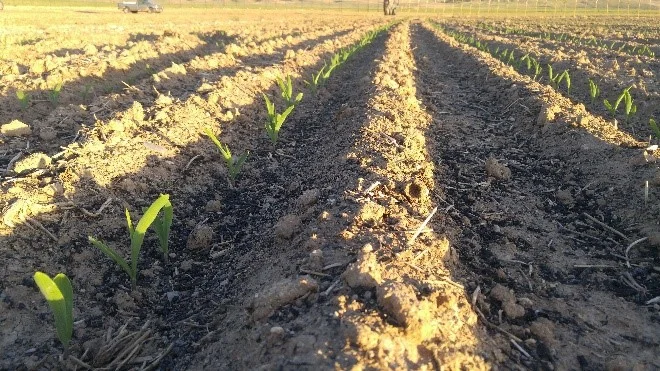
A stable microbial system and mild buffering capacity help ensure that fluctuations in pH and ammonia levels are less abrupt during weather changes or heavy rain. As a result, many farms are able to reduce the frequency of water changes and reduce costs for chemicals and microbial inoculants. After the growing season, the used biochar (following processing, drying, and safety testing) can be applied to improve the soil in gardens and fields. Its mechanism for retaining nutrients is explained in the article Biochar improves soil quality and retains nutrients, but this should only be done when there is no risk of pathogens accumulating in the pond water or of significant drug residues.

Step-by-Step Guide to Installing a Biochar Filtration System for Shrimp Ponds
Step 1: Choose the appropriate type of biochar
- Particle size: About 3–10 mm for filter bags and filter tanks to ensure good water flow and prevent clogging caused by fine particles.
- Purity: Low dust, low ash, and free of impurities; preference is given to suppliers who provide analysis results for pH, EC, ash content, heavy metals, and PAHs (which can be compared against standards such as IBI or EBC).
- pH: Rice husk biochar is typically alkaline, so it should be tested and rinsed before use, especially in ponds with low alkalinity.
- Ingredients: Rice husks are easy to find in the Mekong Delta region; coconut shells are usually hard and have a fine, porous texture; choose based on your budget and needs.
Step 2: Pre-treatment and Activation
- Removing fine dust, rinse several times with clean water until the rinse water is no longer cloudy.
- Soak for 24–48 hours, measure the pH and salinity of the soaking water; change the water if the pH remains high or the EC increases significantly.
- Microbial inoculation: Soak or aerate the substrate in water containing a nitrifying microbial preparation and a mild nitrogen source for a few days, and aerate it to allow a biofilm to begin forming.
Step 3: Common Layout Models
| Filtration Model | Scope of Application | Particle size | Recommended Dosage | Water retention time | Replacement/Reactivation Cycle | Advantages and Limitations |
|---|---|---|---|---|---|---|
| Hanging filter bag | Small ponds, nursery ponds, experimental ponds | 5–10 mm | A few 1–3-kg bags placed near the water pump, in the oxygenated water layer | Continuous water flow | Check every 2–3 weeks; replace or wash after one growing season | Easy to make, inexpensive; low power consumption |
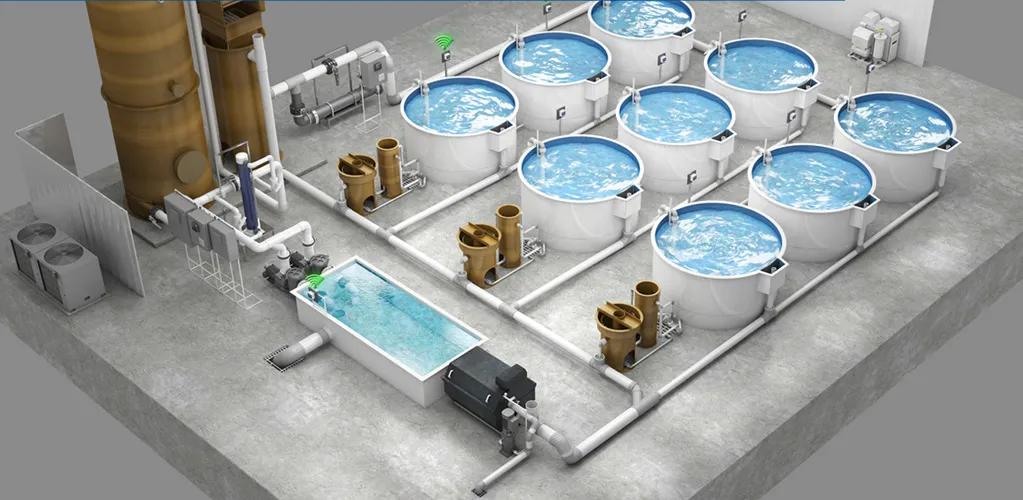
| Recirculating filter tank/chamber | Intensive-culture ponds, recirculating systems | 3–8 mm | Approximately 0.5–2% of the pond volume, depending on stocking density and flow rate | It usually takes anywhere from a few dozen minutes to a few hours; testing is required. | Perform periodic backwashing; regenerate every 1–3 months or as indicated by monitoring results | Clear results, controllable; requires a pump, design |
| Settling pond with integrated filter layer | The farm has its own treatment pond | 5–10 mm | A layer approximately 20–40 cm thick is placed before or after the settling pond | Depends on the volume of the settling pond | Clean the back of the class after each term | Effective water supply and wastewater treatment; space-intensive |
| Filter layer in the water supply culvert | A pond with water rich in organic matter | 5–10 mm | A layer approximately 15–30 cm thick between the two support layers | Slow-moving current | Wash or replace every growing season | Reduce the inlet flow; prone to clogging if the water is cloudy |
Note: The figures above are only a starting point for experimentation; they should be adjusted based on stocking density, pond depth, salinity, and actual monitoring results.
Suggested layout diagram (for designing an illustration): Pond water → pump → mechanical filtration (screen, filter cloth) → biochar chamber with gentle aeration → settling tank → water returns to the pond. For inflow: inflow channel → settling pond → biochar layer at the outlet → grow-out pond.
Step 4: Operation and Monitoring
- Measure pH, NH3/NH4+, NO2-, alkalinity, salinity At the inlet and outlet of the filtration system, keep a daily or weekly log.
- Hold sufficient dissolved oxygen In the filtration zone, the biochar layer, which lacks oxygen, is prone to producing H2S.
- Backwash or flush out sediment when the flow rate decreases significantly.
- When the output no longer differs from the input, it means the material is saturated or clogged: rinse it, expose it to sunlight, replenish the microorganisms, or replace it.
Quick Operations Checklist: (1) The pH of the soaking water has stabilized; (2) microorganisms have been introduced; (3) aeration is in place; (4) there are sampling points at the inlet and outlet; (5) a sanitation schedule is in place.
Common Mistakes and Precautions When Using Biochar in Shrimp Ponds
Use raw, unwashed, or unactivated biochar
New biochar contains coal dust and ash and can temporarily raise the pH and salinity. Dry biochar that has not been inoculated with microorganisms can also adsorb nutrients, beneficial microorganisms, or pesticides in the pond. Solution: Sift, rinse, soak, measure the pH and EC of the soaking water, and then add the microorganisms.
Overdose or incorrect placement
Pouring large amounts of biochar directly onto the bottom of the pond or compacting the filter layer too tightly can cause blockages, create oxygen-depleted zones, and produce toxic gases. Solution: Use a filter bag or a separate compartment, keep the layer at a moderate thickness, place it near a source of oxygen, and allow water to circulate.
Do not check the pH, salinity, or alkalinity before use
Ponds with low alkalinity or a pH close to the upper threshold are more prone to imbalance when exposed to alkaline biochar. Solution: Test it in a bucket of pond water for 1–2 days, measure the pH before and after, and then decide on the dosage.
Choosing biochar of unknown origin
Biochar made from chemically contaminated feedstock or produced through uncontrolled pyrolysis may contain heavy metals and PAHs. Solution: Provide information on raw materials, pyrolysis temperatures, and analysis results; do not use materials that have a burnt smell, are sticky, or contain oil.
Note box: always small-scale trial (one pond or part of a pond) for 1–2 cycles before scaling up. For large ponds, consult with an aquaculture technician or your supplier to design an appropriate layout.
Frequently Asked Questions (FAQ)
Is biochar safe for shrimp, and does it alter the pH and salinity of pond water?
Clean, traceable, and thoroughly washed biochar is generally safe for use in filtration systems. However, new biochar may cause a slight increase in pH and salinity, especially types with a high alkaline pH. Test by soaking and measuring before adding it to the system.
How often should biochar be replaced or reactivated?
There is no fixed schedule, as it depends on the organic load and water flow rate. Generally, it is recommended to check every 2–4 weeks, backwash when the flow rate decreases, and replace or reactivate the filter when the effluent quality is no longer better than the influent quality. Many households replace the filter after each growing season.
How is biochar different from activated carbon when filtering water in shrimp ponds?
Activated carbon, which undergoes additional activation, typically has stronger adsorption capacity but is more expensive. Biochar is less expensive, is available from byproducts such as rice husks, and is particularly suitable as a microbial growth medium. The choice should be based on the farm’s treatment objectives and budget.
Can it be used for white-leg shrimp, black tiger shrimp, and improved extensive aquaculture?
In principle, it can be used for all three models, as the filtration mechanism is not species-specific. The differences lie in density, scale, and layout: intensive farming requires a recirculating filtration system, while improved extensive farming typically only requires filter bags or a filter layer at the inlet.
Summary and Recommendations for Implementation
Biochar for Water Filtration in Shrimp Ponds most effective when considered as support class: It adsorbs organic matter and some dissolved ions, while also serving as a substrate for nitrifying microorganisms. The benefits are most evident when the biochar is clean, has been pretreated, and is placed in an area with oxygen and water flow.
Checklist of 5 things to do before installing the system:
- Identify the objective (reducing NH3, clarifying water, or treating potable water).
- Choose biochar that includes information on its origin and analysis results.
- Rinse, soak, measure pH and EC; add microorganisms.
- Prepare the pump, aeration system, and inlet/outlet sampling points.
- Keep a log of pH, NH3, NO2-, and alkalinity.
Itinerary: Test it in a pond or a section of a pond, monitor it for 2–3 growing seasons, compare it with a control pond, and then scale up the application. If you need large quantities of biochar for a farm or cooperative, BiocharVN supplies rice husk biochar produced in Dong Thap; you can view bulk biochar in jumbo bags and discuss to select the specifications that best suit your filtration system design.