The Current Situation of Contaminated Durian Farmland and Its Impact on the Trees’ Root Systems
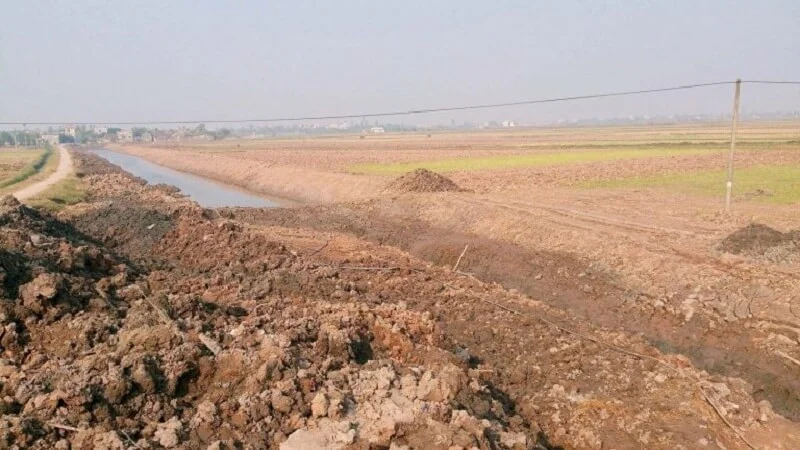
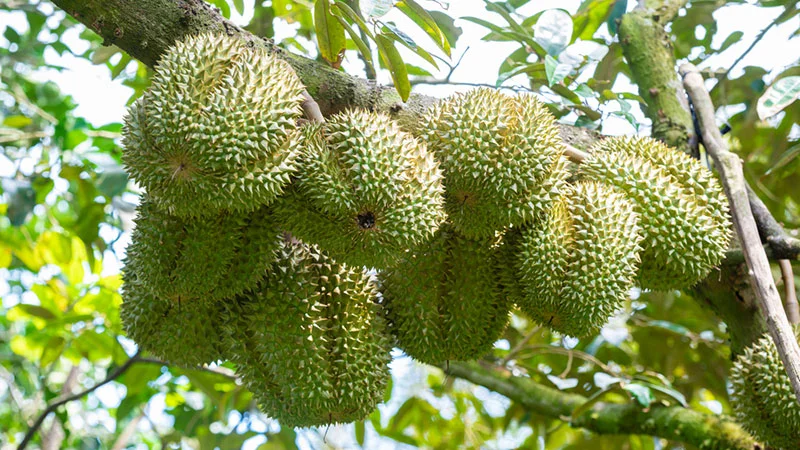
After many years of intensive durian cultivation, many farmers in the Central Highlands, the Southeast, and the Southwest are facing severe soil degradation. The prolonged overuse of pesticides and high doses of chemical fertilizers has destroyed the soil’s microbial ecosystem, causing the soil to become compacted and lose its ability to recover naturally. This is the root cause behind the low yields and stunted growth in numerous durian orchards, even those that have received significant technical investment.
The cause of durian soil contamination is the long-term overuse of pesticides and chemical fertilizers.
On average, a commercial durian orchard undergoes 8 to 12 rounds of pesticide spraying and continuous application of chemical fertilizers each year. Chemical residues that accumulate over time alter the soil’s colloidal structure, disrupt the natural pH buffer system, and cause the soil to become increasingly acidic and compacted.
How do acid-sulfate soils, heavy metal residues, and the Phytophthora fungus attack the root system?
In many acid-sulfate soil areas of the Southwestern Region, soil pH typically ranges from 3.5 to 4.5, which is too low compared to the ideal range of 5.5 to 6.5 required by durian trees. The acidic environment, combined with high humidity, creates ideal conditions for the fungus Phytophthora palmivora—the pathogen responsible for root rot and gummosis—to thrive, while also increasing the solubility of heavy metals such as aluminum and iron, causing direct toxicity to the fine roots.
Why are weak root systems and root rot the root causes of yellowing leaves, slow death, and reduced yield in durian trees?
The root system is the organ responsible for 80% of a plant’s ability to absorb water and nutrients. When fine roots are damaged by toxins and fungal diseases, the plant cannot transport enough nutrients to the foliage, leading to yellowing leaves, leaf drop, depletion, and slow death—even though the stem remains green. This is why soil improvement and root system restoration must be considered top priorities rather than simply focusing on treating symptoms in the foliage.
What Is Biochar and How Does It Scientifically Treat Contaminated Soil?
Definition of biochar and the production process using agricultural byproducts
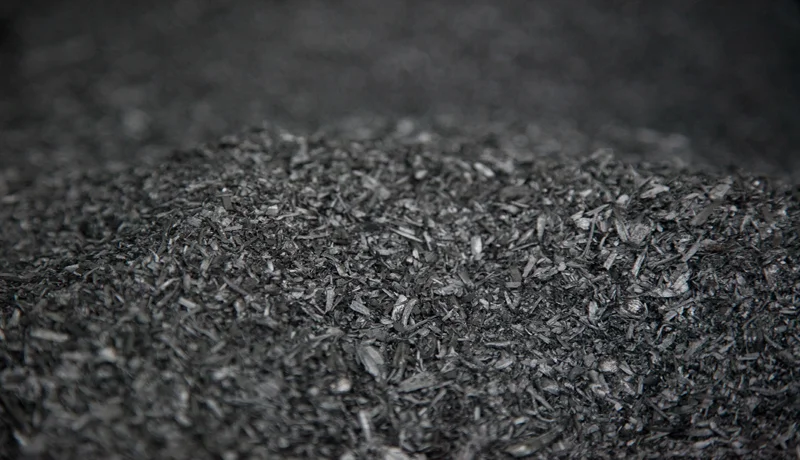
Biochar is a carbon-rich solid product produced through the anaerobic pyrolysis of agricultural byproducts such as rice husks, wood, coffee husks, and sawdust at temperatures of 450–600°C under oxygen-deprived conditions. This process preserves a stable carbon structure with a fixed carbon content typically exceeding 70%, which is entirely different from ordinary charcoal, which contains high levels of ash and impurities.
The multidimensional porous structure helps absorb toxins and heavy metals in durian-growing soil
Under an electron microscope, biochar exhibits a dense structure of microscopic pores with a specific surface area that can reach 300–500 m²/gram. This structure acts like an extremely small “sponge,” adsorbing and firmly trapping toxin molecules, pesticide residues, and heavy metals in the soil, preventing them from coming into direct contact with plant roots.
The Cation Exchange Capacity (CEC) Mechanism in Soil Improvement and Nutrient Retention for Plant Growth
Biochar has a high cation exchange capacity (CEC), ranging from 20 to 40 cmol/kg depending on the feedstock. Thanks to this property, biochar retains essential nutrient ions such as Ca²⁺, K⁺, and Mg²⁺, minimizing leaching during irrigation or heavy rain, while slowly releasing them for plants to absorb as needed.
The role of biochar as an ideal habitat for beneficial microorganisms
The porous structure of biochar also serves as a safe haven for beneficial microorganisms such as Trichoderma, nitrogen-fixing bacteria, mycorrhizal fungi, helping them avoid the adverse effects of the soil environment and develop stable populations, thereby strengthening the natural resistance of the durian root system.
Practical benefits and measurable value of using biochar for durian
Increases water retention and maintains stable moisture levels in the root zone during the dry season
Thanks to its porous structure, biochar can retain 3 to 5 times its own weight in water, helping to maintain more stable moisture levels in the root zone during prolonged droughts in the Central Highlands and significantly reducing the frequency of irrigation required.
Neutralizes the pH of acidic soil, creating an ideal environment for strong growth of fine roots
With its naturally mild alkalinity (pH 8–10), biochar acts as a pH buffer, helping to raise the pH of acidic soil to the optimal range of 5.5–6.5 for durian trees in just 2–3 months after application, thereby promoting uniform growth of white root hairs.
Binds heavy metals and residual chemicals, reducing the risk of root toxicity
Experimental studies show that biochar can reduce the concentration of mobile heavy metals in soil by 40–60% after one crop cycle, significantly limiting root toxicity that accumulates over many years.
Reduce chemical fertilizer use by 20–30% by improving nutrient uptake efficiency
Thanks to its ability to retain and slowly release nutrients, many gardeners who have used biochar in combination with organic fertilizer have reported a 20–30% reduction in chemical fertilizer use while maintaining stable yields and saving on long-term investment costs.
Step-by-Step Guide to Applying Biochar and Standard Dosages for Durian Trees
The Optimal Time to Apply Biochar During the Initial Development and Commercial Operation Phases
The best time is at the start of the rainy season or after harvest, when the soil is still moist and the plants are entering a recovery phase. For newly established orchards, it is recommended to apply the base fertilizer immediately upon digging the planting holes so that the biochar has time to stabilize its structure in the soil before the roots develop vigorously.
Techniques for activating biochar with nutrients before adding it to the soil
Never apply raw biochar directly to the soil, as it will leach existing nutrients, causing a temporary deficiency in the plants. It must be activated by soaking the charcoal in well-rotted manure, earthworm castings, or humic acid solution for 7–10 days before use to saturate the pores with nutrients.
Comparison Table of Basal and Top-Dressing Fertilizer Rates by Tree Age and Size (kg/tree/year)
| Age of the tree | Amount of biochar loaded | Fertilization Frequency | Application Site |
|---|---|---|---|
| 1–3 years (capital construction) | 2–3 kg per tree per year | 1–2 times a year | Spread around the base, 20–30 cm from the base |
| 3–7 years (young, fruit-bearing stage) | 4–6 kg per tree per year | Twice a year (at the beginning and end of the rainy season) | Spread in a fan-shaped pattern, 10–15 cm deep |
| More than 7 years (stable business operations) | 7–10 kg per tree per year | 2–3 times a year | Spread it under the canopy, and lightly loosen the soil |
How to Mix Biochar with Organic Fertilizer and the Antagonistic Fungus Trichoderma
Recommended mixing ratio: 1 part activated biochar – 2 parts well-decomposed organic fertilizer – supplemented with 0.5–1% Trichoderma preparation by weight. This mixture both improves soil quality and provides a source of antagonistic microorganisms that effectively and sustainably control Phytophthora fungi, which cause root rot.
Common Mistakes and Important Warnings When Using Biochar
Using raw, untreated biochar that has not been mineral-enriched can backfire
This is the most common mistake that leads many gardeners to misjudge the effectiveness of biochar. Raw biochar has a very strong nutrient-absorbing effect during the first 1–2 months; if applied directly, it can cause temporary nutrient deficiency in plants, resulting in mild yellowing of the leaves, even though the soil is actually being effectively improved.
Over-fertilization causes nutritional imbalances, root shock in young plants, and growth inhibition
Do not apply more than 10 kg per tree per year to mature trees. A single overdose can cause a sudden increase in soil pH, shocking the young root system and inhibiting the uptake of micronutrients such as iron, zinc, and manganese.
Failure to test soil pH before application results in poor soil improvement
For gardens with soil that is already neutral or slightly alkaline (above 6.5), reduce the amount of biochar used and prioritize types enriched with humic acid to prevent the pH from rising too high, which can cause micronutrient deficiencies in plants.
Applying it at the wrong time in combination with chemical pesticides reduces the activity of biochar
There should be an interval of at least 7–10 days between applying biochar and spraying chemical pesticides—especially copper-based pesticides—because biochar can adsorb the active ingredients, reducing the effectiveness of disease control and resulting in a waste of investment.
Frequently Asked Questions (FAQ)
Can biochar completely replace chemical fertilizers for durian?
No. Biochar is a soil conditioner and nutrient-retaining growing medium; it does not contain sufficient levels of NPK. It helps reduce the amount of chemical fertilizer by 20–30% by increasing absorption efficiency, but it does not completely replace the role of fertilizer.
How long after applying biochar does it take for durian trees to grow new roots and show noticeable recovery?
Typically, after 30–45 days, white root hairs begin to appear clearly around the application area if the soil has been amended to the appropriate pH level. The overall effect on the foliage is usually evident after 2–3 months.
Can biochar be used on durian soil that is heavily saline or acidic?
That is entirely correct. Biochar helps neutralize the acidity of acid-sulfate soils and helps reduce the impact of Na+ ions in saline soils through cation exchange; however, it must be combined with additional measures such as salt leaching and mechanical removal of acid-sulfate minerals.
Should I choose powdered, compressed pellet, or chunk-form biochar for my durian orchard?
The flake or small granule form (2–5 mm) is recommended because it mixes easily with organic fertilizer, breaks down slowly, and helps maintain soil structure for a longer period than the fine powder form, which is prone to leaching.
Summary & Practical Tips for Improving Durian Soil with Biochar
Biochar is not a “miracle cure” that provides instant results, but it is a fundamental, sustainable solution for restoring soil structure, neutralizing toxins, and replenishing beneficial microorganisms in the durian root zone. To achieve optimal results, growers should follow this 3-step process: (1) Check the pH and soil condition, (2) Enriching biochar with nutrients before application, (3) Apply the correct dosage based on the plant's age and monitor the response of the roots and leaves after 30–45 days.
When selecting products, growers should prioritize biochar with a clear origin, produced at a standard pyrolysis temperature of 450–600°C, with a fixed carbon content of over 70%, and certified to be free of heavy metal residues. BiocharVN is proud to offer a line of biochar products that meet these technical standards, partnering with hundreds of durian growers in the Central Highlands and the Southeast Region on their journey to restore soil health, regenerate strong root systems, and achieve long-term sustainable development.