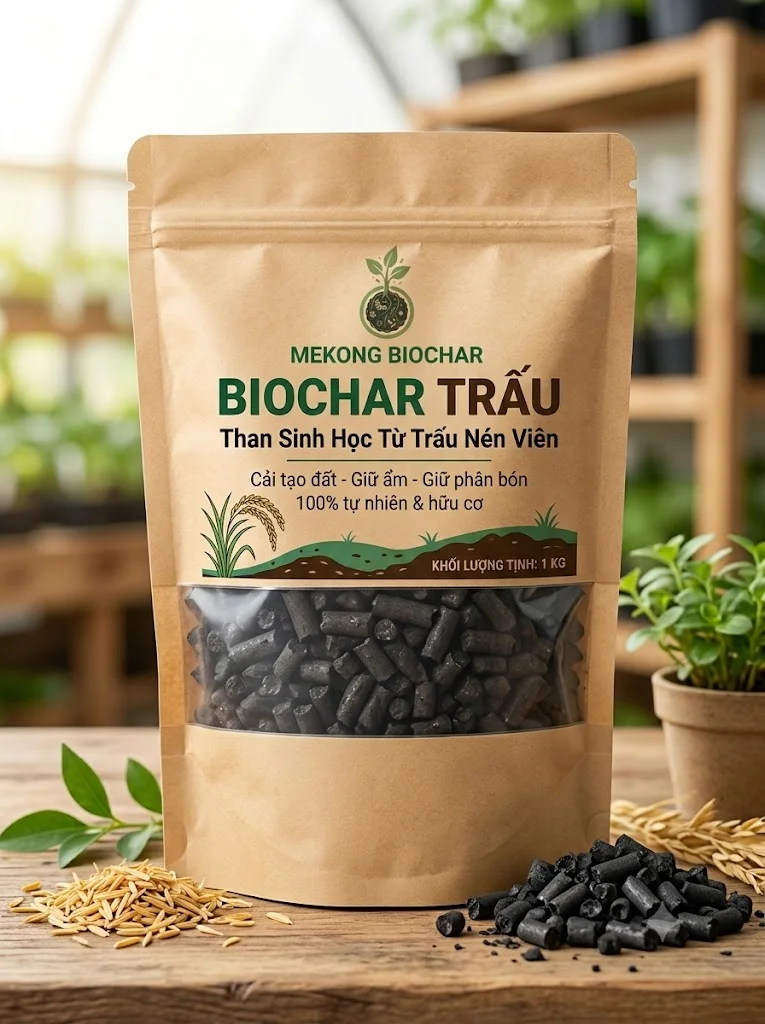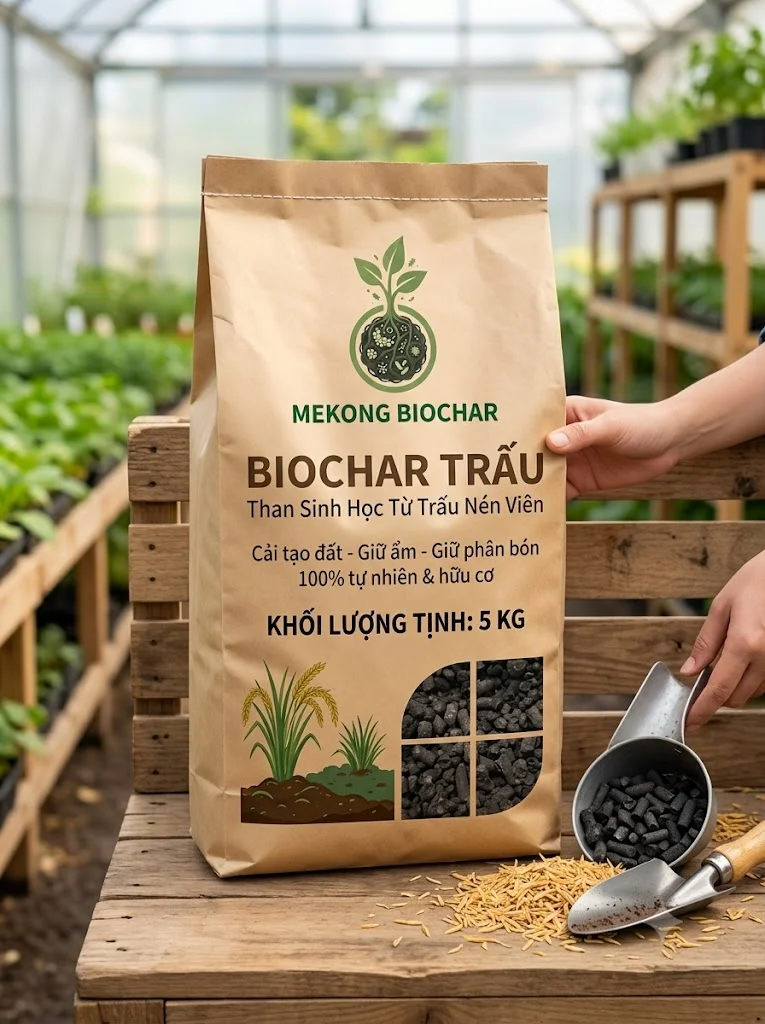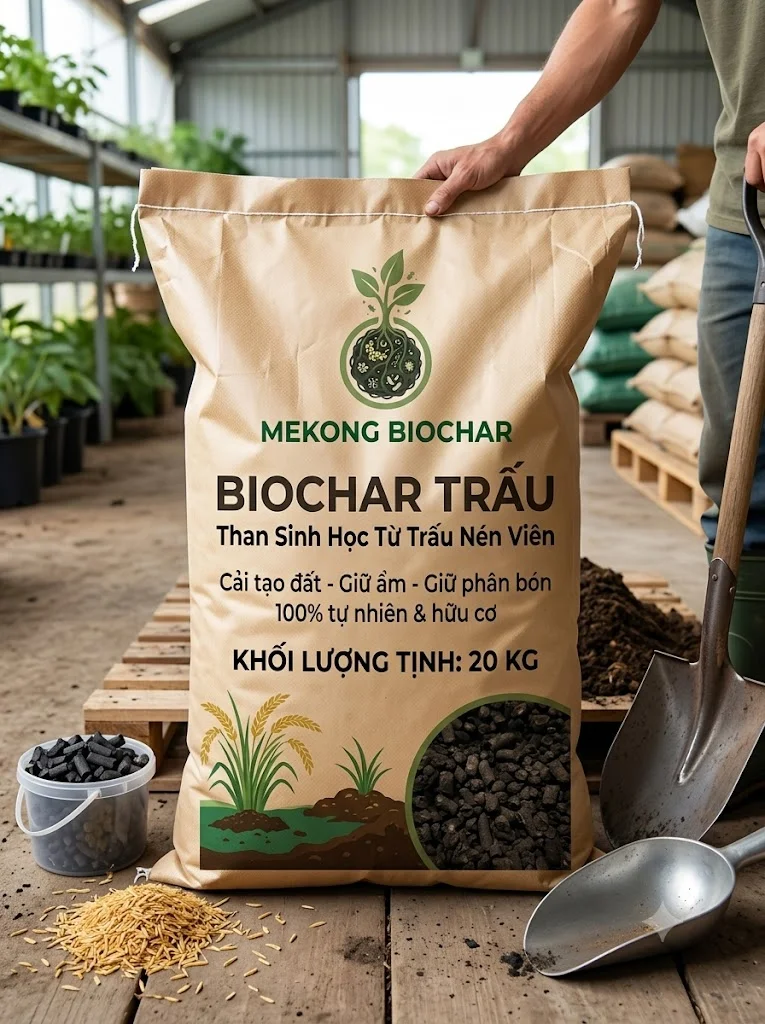
Biochar from Rice Husk – 20 kg Bags for Farms and Fruit Orchards
Package
Bao 20 kg
Unit
bao
Short description
Product details
20-kg bags for farms and fruit orchards
The 20-kg package is designed for home gardens and farms that need to improve soil over large areas. Biochar made from pyrolyzed rice husks helps garden soil retain moisture during the dry season, reduces fertilizer leaching, and loosens compacted soil around the root zone. Learn more about how to use it for durian orchard.
5 Key Benefits of Using Biochar
- Longer-lasting moisture: The pores in biochar retain water and gradually release it to the roots, helping to reduce the frequency of watering during the dry season.
- Retain fertilizer, reduce runoff: The biochar surface retains nitrogen, potassium, and other minerals, helping plants use fertilizer more efficiently.
- Loose, well-aerated soil: Mix it into heavy clay soil or compacted soil to make the soil loose and well-drained.
- Habitat of beneficial microorganisms: It is particularly effective when mixed with organic fertilizer or microbial products.
- Improving Acidic Soil: Rice husk biochar is slightly alkaline, helping to raise the pH of acidic and iron-rich soils. Learn more mechanisms for retaining water and raising soil pH.
Product Specifications
| Ingredients | 100% rice husks |
|---|---|
| Method | Anaerobic pyrolysis (in the absence of oxygen) |
| Specifications | 20-kg bag |
| Country of Origin | Manufactured in Dong Thap, Vietnam |
Instructions for Use in Fruit and Vegetable Gardens
- Fruit trees 1–3 years old: 1–2 kg per plant, mixed with 5–10 kg of well-rotted manure when digging the planting hole.
- Fruit trees currently bearing fruit: 3–5 kg per plant per year, spread around the tree’s canopy and lightly worked into the soil, divided into two applications (after harvest and at the start of the rainy season).
- Coffee, black pepper: 2–4 kg per coffee plant, 1–2 kg per pepper post; apply in furrows or pits along with organic fertilizer.
- Field vegetables: 1–1.5 kg/m² mixed into the topsoil when preparing the beds.
The above dosage is for reference only; adjust it according to soil conditions and the technician’s recommendations.
Tips for faster results: Compost biochar together with well-rotted manure or earthworm castings and microbial preparations for 7 to 14 days before applying it. Biochar will already be “loaded” with nutrients and microorganisms, so it will not temporarily hold the plant’s nutrients during the initial period.
Frequently Asked Questions
Can biochar replace fertilizer?
No. Biochar is a soil conditioner that helps retain and enhance the effectiveness of fertilizer. You should continue to apply fertilizer as usual, and you can often reduce the amount after a few growing seasons.
How is biochar different from rice husks that are self-charred at home?
Rice husks that are self-ignited typically burn unevenly, resulting in a mixture of ash and unburned husks. Biochar, on the other hand, is produced through controlled pyrolysis, resulting in uniform carbonization, a high porosity, and fewer impurities.
How should it be stored?
Store in a dry place and seal the bag tightly. Biochar does not decompose, so it can be used for a long time.
Product Q&A
No questions yet. Be the first to ask!
Customer reviews
No reviews for this product yet.
You need to sign in and complete a purchase to leave a review.