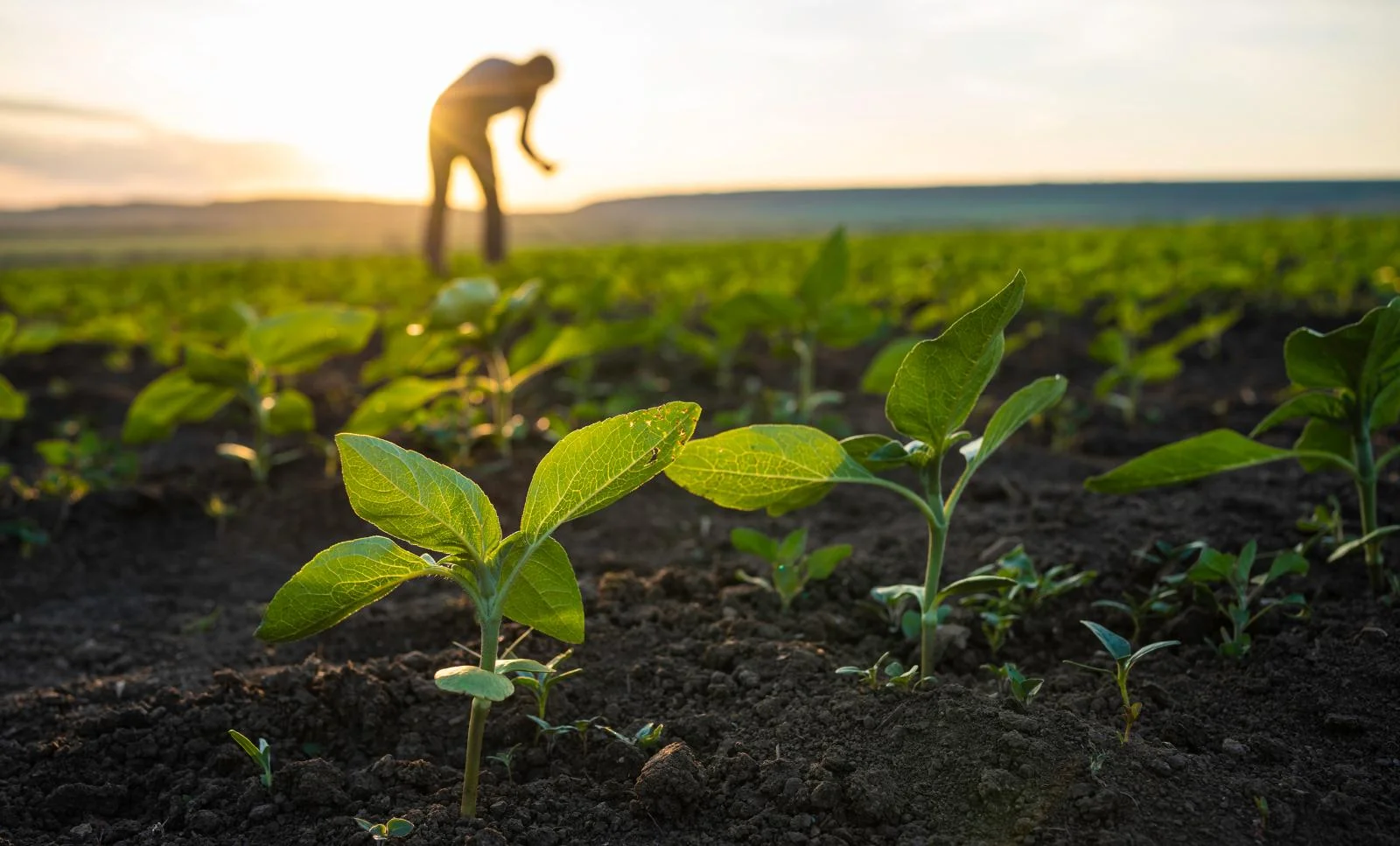
Imagine holding a handful of dry, gray, barren soil in your hands—with no sign of life: no earthworms, no distinct earthy scent, not even the dark brown hue of organic matter. This is a familiar sight for millions of Vietnamese farmers facing the increasingly severe reality of soil degradation. However, the story doesn’t end there. Through a smart combination of Biochar and organic fertilizer for soil improvement...even land that seems completely "dead" can be revived—returning to its former fertility, brimming with vitality, and yielding bountiful harvests.
Land Degradation – An Alarming Situation in Vietnam
How much of Vietnam’s agricultural land is currently degraded?
According to data from the Ministry of Agriculture and Rural Development, Vietnam currently has more than 9.3 million hectares of land are degraded to varying degrees, accounting for nearly 28% of the country’s total land area. The Food and Agriculture Organization of the United Nations (FAO) has also warned that Southeast Asia, including Vietnam, is one of the regions most severely affected by human-induced land degradation.
The main reasons why soil becomes "dead": improper farming practices and overuse of chemicals
Soil doesn’t just “die” on its own. It is the cumulative result of many years of unsustainable farming practices:
- Overuse of chemical fertilizers and pesticides disrupts the balance of the soil microbiome, leads to the accumulation of toxins, and causes the soil to become increasingly acidic.
- Continuous monoculture Growing the same type of plant on a single plot of land depletes specific nutrients.
- Erosion and runoff due to heavy rain on steep slopes with little vegetation cover.
- Lack of organic matter causing the organic matter content in the soil to decline steadily.
The Impact of Degraded Soil on Crop Yields and Farmers’ Livelihoods
Soil degradation leads to lower yields, higher input costs, and a cycle of poverty for farmers. When the soil loses its ability to retain water and nutrients, farmers are forced to apply more chemical fertilizers—which, in turn, further degrades the soil. Many farming households in the Central Highlands and the lowlands have reported that even though they are applying twice as much fertilizer as they did 10 years ago, yields have not increased.
Why is a natural alternative to chemical fertilizers needed?
Chemical fertilizers address immediate nutritional needs but cannot restore soil fertility soil structure, microbial community, and natural water-holding capacityThat is why an increasing number of experts and pioneering farmers are turning to biological solutions, particularly the combination of biochar and organic fertilizer—the two most powerful natural "tools" in the quest to improve soil quality.
What Is Biochar and Why Is It Called the 'Black Gold' of Agriculture?
Definition of biochar: How is biochar produced?
Biochar (biocoal) is a product produced by burning organic materials (such as rice husks, corn cobs, straw, and tree branches) under conditions oxygen-deficient or oxygen-free, known as pyrolysis. Unlike conventional combustion, which produces ash and CO₂, pyrolysis retains most of the carbon within the material’s structure, forming a special type of charcoal that is durable and rich in agricultural value.
The pyrolysis process – the secret to turning agricultural waste into biochar
The pyrolysis process typically occurs at temperatures ranging from 300–700°C in an oxygen-limited environment. Under these conditions, complex organic molecules are broken down and restructured into stable aromatic carbon rings. The result is a porous, lightweight, dark-black form of carbon with an extremely large surface area—which can reach up to 300–500 square meters per gram materials.
The unique pore structure of biochar and its significance for agricultural soil
Under a microscope, biochar resembles a multi-story building with countless tiny rooms. It is this porous structure that gives it its superior properties:
- Effective water conservation: Each small pore can store water and nutrients, helping plants survive the dry season.
- Providing a "home" for beneficial microorganisms: Billions of beneficial bacteria and fungi thrive in the soil’s pores, creating a rich soil ecosystem.
- Improve ventilation: Helps plant roots grow easily and absorb oxygen.
How is biochar different from regular charcoal and kitchen ash?
Many people confuse biochar with charcoal or kitchen ash. The key difference is:
| Type | Structure | Main effects | Durability in soil |
|---|---|---|---|
| Biochar | High porosity, durable carbon | Soil remediation, carbon sequestration | Hundreds to thousands of years |
| Charcoal | Denser, less porous | Fuel | Shorter |
| Stove ash | No carbon structure | Provides potassium and calcium | Washes away quickly |
Organic Fertilizer – A Source of Vital Nutrients for Soil and Plants
Common types of organic fertilizers: manure, compost, green manure, and worm castings
Organic fertilizer is not a single type but a diverse group:
- Manure (from cattle, buffalo, pigs, and chickens): Rich in protein, phosphorus, potassium, and microorganisms. Must be composted before application to prevent harm.
- Compost: Made from household organic waste, agricultural byproducts, and plant leaves—through a controlled composting process, it produces valuable compost.
- Green manure: Legumes are buried directly in the ground while still fresh, providing natural nitrogen from nitrogen-fixing bacteria.
- Worm castings (vermicompost): Earthworm castings break down organic matter and are extremely rich in nutrients and beneficial microorganisms.
What role do microorganisms in organic matter play in the soil ecosystem?
One gram of healthy soil contains... microbial count – bacteria, fungi, and actinomycetes. These tiny organisms perform essential functions:
- Break down complex organic matter into nutrients that plants can absorb
- Nitrogen fixation from the air (Rhizobium bacteria)
- Protect crops from fungal diseases and harmful bacteria
- Creates a binding agent that helps the soil develop a loose, porous, and stable structure
Comparing Organic and Chemical Fertilizers: Long-Term vs. Short-Term Benefits
Chemical fertilizers act quickly but literally "burn" the soil—killing microorganisms, disrupting its structure, and creating an increasing dependency. Organic fertilizers, while slower-acting, build a sustainable soil foundation over time, helping to gradually reduce the need for external inputs.
Tips for using organic fertilizer to avoid harming plants and soil
- Always left to rot Compost manure before applying it—fresh manure contains ammonia and pathogens that can be harmful.
- Do not over-fertilize organic fertilizer, as it can lead to excess nitrogen, which affects the quality of agricultural products.
- Note the origin: Manure from livestock fed antibiotics can introduce antibiotic-resistant genes into the soil.
The Power of Synergy: Biochar and Organic Fertilizer Working Together to Revitalize Depleted Soil
Why do biochar and organic fertilizer complement each other so well?
If organic matter is "food," then biochar is "shelter"—and soil needs both. This is a synergistic combination: biochar alone does not provide much direct nutrition, while organic matter without a stable place to settle will be washed away and break down quickly. When combined, they create a complete, balanced, and self-sustaining soil system.
Biochar as a "home" for microorganisms in organic fertilizer
The porous pores in biochar create an ideal environment for microorganisms from organic matter to colonize and reproduce. Protected within these tiny "chambers," the microorganisms are shielded from extreme temperatures, fluctuating humidity, and harmful substances. Research from Cornell University (U.S.) shows The microbial density in soil containing biochar is 25–100% higher than in the control soil after 6 months.
The mechanism by which combining these two types improves soil water retention and aeration
This combination has a positive effect on the two most important physical properties of soil:
- Water retention capacity increases by 15–40% (depending on soil type): Especially important for sandy soils or soils in arid regions.
- Improved breathability: The soil is not compacted, allowing roots to grow freely and minimizing localized waterlogging.
- Soil temperature is more stable: Biochar absorbs heat during the day and releases it at night, creating a stable environment for microorganisms.
Scientific and empirical evidence from successful agricultural models
A study published in the journal Soil and Tillage Research shows that combining biochar (2 tons/ha) with compost (5 tons/ha) on degraded soils in tropical regions helps increase rice yields by 23–35% after two growing seasons. In Vietnam, trials conducted by the Vietnam Academy of Agricultural Sciences (VAAS) in the nutrient-poor soils of the North Central Region also yielded similar results.
Effects on soil pH and crop nutrient uptake
Most biochar is slightly alkaline (pH 7–10), which helps neutralize acidic soil—a common problem in many agricultural regions of Vietnam due to the overuse of nitrogen fertilizers. When soil pH is restored to neutral levels (pH 6–7), The absorption of nutrients such as phosphorus, potassium, calcium, and magnesium increases significantly, helping plants make the most of available nutrients.
Practical Guide: How to Make Biochar and Compost at Home
Available materials for making biochar: rice husks, corn cobs, tree branches, and straw
The good news is that the raw materials for making biochar are widely available in Vietnam:
- Rice husks: Most common in the plains, easily pyrolyzed, producing high-silica biochar suitable for rice
- Corn cobs and corn stalks: Abundant supplies in the Central Highlands and corn-growing regions
- Tree branches, coconut husks: Produce high-quality biochar with large pores
- Straw: Must be compressed or combined with other materials for efficient combustion
A simple pyrolysis method suitable for small-scale farmers
The drum oven method (Vietnamese-style Kon-Tiki):
- Take a 200-liter drum and drill a hole in the bottom for ventilation
- Place a layer of dry material on the bottom (about 20 cm thick), then light the fire
- When the bottom layer is glowing red, continue adding ingredients in layers
- Observe the smoke: cloudy white smoke (water vapor) → clearer smoke (thermal decomposition proceeding well)
- When there is no more smoke and the coal has turned a uniform dark black → extinguish with water
- Let it cool, recover the biochar, and store it in a dry place
How to Make Compost from Household Organic Waste and Agricultural Byproducts
Basic composting formula (C:N ratio = 25–30:1):
- Green manure (nitrogen-rich): Vegetable scraps, fresh grass, fresh livestock manure (30–40%)
- Brown ingredients (rich in vitamin C): Dry straw, dry leaves, and dry corn stalks (accounting for 60–70%)
- Mix thoroughly and maintain a moisture level of 50–60% (when squeezed in a fist, the soil should not release water)
- Turn the soil every 7–10 days to provide oxygen
- After 6–8 weeks, the compost is dark brown in color, has an earthy smell, and no longer resembles the original materials, which have decomposed
The appropriate mixing ratio of biochar and organic fertilizer for each soil type and crop
- Sandy soil, severely degraded soil: Biochar 3–5 tons/ha + compost 8–10 tons/ha
- Slightly degraded loam: Biochar 1–2 tons/ha + organic fertilizer 5–7 tons/ha
- Vegetable and flower garden: Mix biochar and compost in the following ratio 1:4 by volume, apply to the soil before planting
- Rice: Dilute rice husk biochar in water, then spray or irrigate the fields while incorporating green manure
Fertilization schedule and monitoring of results after application
Biochar is a long-term investment—don’t expect results in the first growing season. Recommended schedule:
- January–March: Soil improvement, application of biochar and compost, measurement of initial pH and moisture content
- April–June: Planting trees, monitoring growth, and comparing with the control plot
- Starting in the second year: Simply add organic fertilizer on a regular basis and gradually reduce the amount of new biochar added
Real-Life Story: Land Revitalized by Biochar and Organic Fertilizer
A Model for Restoring Degraded Soil in the Central Highlands Using Rice Husk Biochar
In Dak Mil District, Dak Nong Province, a group of coffee farmers has been experimenting with applying biochar made from coffee husks combined with compost from tree trunks and grass. After 2 years, soil acidity decreased from a pH of 4.5 to 5.8, organic matter content increased by 0.8%, and most importantly – Coffee yields increased by 18% while fertilizer costs decreased by 30%.
Farmers in the Mekong Delta have reduced their use of chemical fertilizers by 50% by combining them with organic fertilizers
Mr. Nguyen Van Tam, a rice farmer in Long An, shared: "At first, I didn’t believe it; I thought the rice would die if I stopped using chemical fertilizers. But after making compost from straw and cow manure and adding pyrolyzed rice husk ash, I was able to reduce the amount of urea by more than half in the second crop, yet the rice still looked healthy and the grains were firmer than before."
Lessons from successful regenerative agriculture projects in Southeast Asia
Thailand and Indonesia have implemented large-scale projects using biochar combined with organic fertilizer on degraded tropical soils. Results from the FAO's RECSOIL project A study conducted in four Southeast Asian countries shows that after three years of implementation, the organic carbon content in the soil increased by an average of 0.3–0.5%—a figure that may seem small but means the soil can retain tens of tons more water per hectare.
Practical Challenges and Strategies for Overcoming Them When Transitioning to Organic Farming
Transition isn’t always smooth. Common challenges include:
- Yields may decline slightly in the first season – This is a natural transition phase; patience is required
- The initial cost of building a biochar kiln or purchasing organic fertilizer – may be eligible for support from programs administered by the local Department of Agriculture
- Lack of technical knowledge – Join organic farming clubs or contact your local agricultural extension office
Double Benefits: Good for the Soil, Good for the Climate, and Good for Farming Households
Biochar helps store carbon—contributing to Vietnam’s emissions reduction goals
Vietnam committed to achieving net-zero emissions by 2050 at COP26. Biochar is one of the solutions carbon-negative rare—meaning it helps remove CO₂ from the atmosphere. The carbon in biochar remains stable in the soil for hundreds of years and does not break down back into CO₂ like ordinary organic matter. If 10% of Vietnam’s agricultural land were to use biochar, the amount of carbon stored could be equivalent to millions of tons of CO₂ each year.
Reduce production costs by decreasing reliance on imported chemical fertilizers
Vietnam imports large quantities of chemical fertilizers each year, with costs fluctuating based on international market prices and exchange rates. Reducing reliance on imported fertilizers by producing biochar and compost from agricultural byproducts helps:
- Save 20–40% on fertilizer costs within 3–5 years
- Increase autonomy and avoid being affected by global price fluctuations
- Creating a closed-loop circular economy on the farm
Increasing the value of agricultural products through organic and sustainable farming practices
Demand for organic agricultural products in Vietnam and the export market is growing rapidly. Agricultural products that are certified organic or produced using eco-friendly methods can be sold at prices 20–50% higher Compared to conventional agricultural products, this opens up opportunities for significant income growth for farming households.
Government support policies for organic agriculture and soil restoration
The Vietnamese government has issued several policies to support the development of organic agriculture in accordance with Decree No. 109/2018/NĐ-CP and programs offered by the Ministry of Agriculture and Rural Development, including support for organic certification, preferential loans, and technical training. This is an opportune time for farmers to transition to sustainable farming practices.
Conclusion: The Journey to Transform Barren Land into Fertile Land Begins Today
Summary of the complementary roles of biochar and organic fertilizer in soil improvement
Biochar and organic fertilizer aren’t instant miracle solutions, but they are solid foundation for a healthy, sustainable farming system. Biochar improves soil structure, retains water, supports microbial life, and stabilizes pH levels. Organic fertilizer provides nutrients, beneficial microorganisms, and organic matter. Together, they create a natural cycle that nature has been using for millions of years.
Tips for getting started right away with minimal resources
You don’t need to make a big investment to get started. All you need is:
- Collecting rice husks or corn cobs from the last harvest
- Make a small batch of biochar using the simple drum method
- Start a compost pile from kitchen waste and straw
- Test application on 1 sào of land and compare it with a conventional crop plot
Practical experience is the best teacher. Start small, learn as you go, and expand gradually.
Long-term vision: Regenerative agriculture is the future of Vietnam’s agricultural sector
Regenerative agriculture – farming models that are not only sustainable but also actively restore soil, ecosystems, and the climate – are emerging as a global trend. With a long history of agriculture and abundant agricultural byproducts, Vietnam is well-positioned to become a model of regenerative agriculture in the Southeast Asian region.
Call to Action: Share your experiences and help build a sustainable farming community
Every handful of biochar added to the soil is a step toward the future. If you’ve experimented with biochar or composting, please share your experiences with the community—because farmers’ practical knowledge is our most valuable asset in the journey toward building a green, clean, and prosperous agricultural sector in Vietnam. The earth is the foundation of all life – and the journey to revive it begins with the hands and dedication of each and every one of us.