Each rice season, farmers in the Mekong Delta apply an average of 100 to 150 kilograms of urea per hectare—30–50% more than technical recommendations. In concentrated vegetable-growing regions such as Lam Dong or Hai Duong, this figure is even more concerning. Nitrogen fertilizer is cheap, easy to buy, and yields quick results in the fields — that is why farmers cling to this habit even though they know the soil is becoming increasingly depleted.
In that context, a soil-improvement material known as biochar (biochar) is attracting increasing attention from both the research community and the agricultural sector. The question at hand is a significant one: Does applying biochar really help reduce nitrogen fertilizer use by 30% while still achieving comparable crop yields? This article analyzes the feasibility of that figure based on empirical evidence, specific technical conditions, and the economic realities of Vietnam’s agricultural sector.
Context: Vietnam’s agricultural sector is facing the challenge of excessive nitrogen fertilizer use
The Current Situation of Excessive Nitrogen Fertilizer Use in Rice and Vegetable-Growing Regions
According to data from the Plant Protection Department (2022), the amount of chemical fertilizer used in Vietnam is approximately 10–11 million tons per year, with nitrogen fertilizer accounting for the largest share. Specifically for rice, numerous field studies indicate that the nitrogen use efficiency (NUE) of Vietnamese farmers is only 30–40%, meaning that more than half of the nitrogen applied to the soil is lost through volatilization, leaching, or fixation in the soil that the plants cannot absorb.
The economic and environmental consequences of excessive nitrogen fertilization
The consequences go beyond mere economic waste. Excess nitrogen is converted into nitrate (NO₃⁻), which seeps into groundwater, contaminating drinking water sources and causing eutrophication in waterways. N₂O—a greenhouse gas nearly 300 times more potent than CO₂—is emitted from flooded rice fields and is a significant contributor to the country’s agricultural emissions. Economically, fertilizer costs account for 25–35% of total input costs for rice-growing households, and this pressure intensifies when urea prices fluctuate sharply on the global market.
The pressure to find sustainable farming solutions
Vietnam has committed to achieving net-zero emissions by 2050 and reducing agricultural emissions by 30% by 2030 under the COP26 agreement. The Strategy for Sustainable Agricultural and Rural Development 2021–2030 also sets a target of reducing the use of chemical fertilizers by 30%. Against this backdrop, Biochar has emerged as a promising approach — which not only has the potential to improve nitrogen use efficiency but also helps sequester carbon in the soil over the long term.
What is biochar, and how does it affect nitrogen nutrition in the soil?
Definition and Structure of Biochar
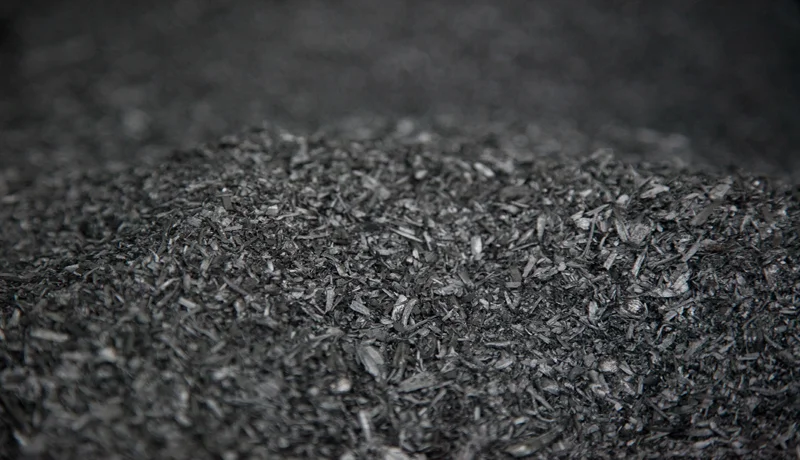
Biochar is a solid carbon product produced through the process biomass pyrolysis (rice husks, straw, coffee husks, wood chips, etc.) under oxygen-deprived conditions at temperatures ranging from 300–700°C. Unlike industrial activated carbon, biochar is produced for soil improvement and does not undergo a chemical activation process.
What makes biochar unique is microscopic porous structure with a surface area ranging from 100 to over 400 m²/g. Think of biochar as a tiny sponge in the soil—it retains ammonium ions (NH₄⁺) and some nitrate (NO₃⁻) through physical and electrostatic adsorption, preventing these nutrients from being leached away before plants can absorb them.
Mechanisms affecting the nitrogen cycle and soil microorganisms
Biochar is not just a passive storage material. Research shows that biochar creates an ideal microenvironment for nitrogen-fixing bacteria and nitrifying bacteria growth, thereby improving the natural nitrogen cycle in the soil. Biochar also helps raise the pH of acidic soil, increasing the solubility and uptake of nitrogen by plants.
The differences between types of biochar
Not all biochar is created equal. Biochar from rice husks It typically has a high silica content, making it suitable for paddy rice. Biochar from rice straw rich in potassium, ideal for short-season crops. Biochar from coffee husks has a higher organic carbon content, making it suitable for the red basalt soils of the Central Highlands. Pyrolysis temperature also plays a significant role—biochar produced at higher temperatures (>500°C) is generally more stable in soil but has a lower adsorption surface area compared to low-temperature biochar.
Overview of experiments on biochar application combined with reduced nitrogen fertilizer use in Vietnam and the region
Experiments on rice plants in the Mekong Delta
A research team from Can Tho University (Nguyen Minh Dong et al., 2019–2021) conducted field trials on alluvial soils in Hau Giang and Vinh Long using the OM5451 rice variety. The results showed that when 10 tons of biochar per hectare derived from rice husks were applied in combination with a 25% reduction in the recommended nitrogen rate, rice yield did not decrease significantly (varying by ±5%) compared to the full nitrogen application without biochar. However, the most noticeable effect was observed on soil with a pH below 5.5 and soil with low organic matter content.
Research on vegetable and cash crops in Central Vietnam and the Central Highlands
The Central Highlands Institute of Agricultural and Forestry Sciences (WASI) has conducted trials using coffee husk biochar on corn and soybean crops in Đắk Lắk. After two consecutive growing seasons, the group applying 8 tons of biochar per hectare combined with a 30% reduction in nitrogen fertilizer achieved comparable yields, while also noting significant improvements in soil structure and water-holding capacity. In Central Vietnam, a trial on coastal sandy soil in Quang Nam (2020) showed an effective reduction in nitrogen use of up to 35% when combining biochar with organic fertilizer.
Evidence from countries with similar conditions
A meta-analysis by Agegnehu et al. (2017), based on 57 global studies, found that biochar on average increases NUE (nitrogen use efficiency) by 10–25%. At Bangladesh, a study by Islam et al. (2021) on rice grown in acidic soils showed a 30% reduction in nitrogen fertilizer application when 10 tons of biochar per hectare were applied, while yields remained stable. At IndonesiaExperiments conducted on Ultisol soil (a nutrient-poor, acidic red soil similar to that found in some regions of the Central Highlands) showed that a 25–40% reduction in nitrogen application is achievable after 2–3 consecutive growing seasons.
Actual protein reduction: does not always reach 30%
Overall, the review of the literature shows that The reduction in protein content ranged from 15% to 40%, depending on soil type, crop type, biochar quality, and application rate. A 30% rate is entirely feasible but is not a one-size-fits-all figure under all conditions.
Technical Feasibility Analysis: How realistic is a 30% reduction in nitrogen fertilizer use?
Factors that determine effectiveness
The three most important factors that determine whether biochar can help reduce nitrogen fertilizer use by 30% are:
- Soil type: Sandy, leached soils; acidic soils with a low pH (below 5.5); and soils low in organic matter are the environments where biochar is most effective. In contrast, on the fertile alluvial soils of the Red River Delta, which are already nutrient-rich, biochar’s nitrogen-retention effect is less pronounced.
- Amount of biochar applied: Experiments show that the minimum effective threshold is usually 5–10 tons per hectare. Applying less than 3 tons per hectare typically does not result in a significant difference.
- Biochar quality: Biochar produced at the correct temperature (350–550°C) from clean feedstock with a neutral to slightly alkaline pH (6.5–8.5) will yield significantly better results than substandard biochar.
When does biochar work best?
Biochar produced the most impressive results in The first 2–3 crops after application, particularly on sandy loam and degraded basaltic red soils. On alluvial soils that have been cultivated for many years and regularly supplemented with organic fertilizer, biochar remains effective, but the actual reduction in nitrogen levels is typically lower, at only about 15–20%.
Technical risks to be aware of
Biochar is not without risks. Biochar produced from contaminated materials (such as straw containing pesticide residues or chemically treated wood) can introduce heavy metals or toxic compounds into the soil. Applying excessive amounts of strongly alkaline biochar to soil that already has a high pH can lead to micronutrient deficiencies in crops. Stabilization period The effects of biochar in the soil typically take 1–2 growing seasons to become apparent; therefore, reducing nitrogen fertilizer application starting from the first growing season may result in a temporary drop in yield.
Comprehensive Review
Percentage decrease A 30% nitrogen fertilizer is technically feasible, but only under the following conditions: (1) the soil has a low pH or is nutrient-poor, (2) high-quality biochar is applied at a rate of 8–10 tons per hectare, (3) it is combined with organic fertilizer, and (4) the application is not reduced abruptly in the first season but is gradually reduced over a period of 2–3 seasons.
Economic feasibility: Do Vietnamese farmers really benefit from using biochar?
Actual costs and benefits
This is a crucial question for farmers. The market price of commercial biochar in Vietnam currently ranges from 3,000–8,000 VND/kg, equivalent to 30–80 million VND per hectare if 10 tons are applied. This is a significant initial cost, especially for small-scale farmers with less than 1 hectare of land.
However, there are two important points to note: First, Biochar remains in the soil for 50 to hundreds of years, so the initial investment costs are spread over multiple growing seasons. Second, with urea prices at around 13,000–15,000 VND/kg and a 30% reduction based on an application rate of 120 kg N/ha (equivalent to ~260 kg of urea/ha), farmers save approximately 78 kg of urea per hectare per crop, or approximately 1–1.2 million VND per crop. With 2–3 harvests per year, cumulative savings can reach 2–3.5 million VND per hectare per year.
The potential for producing biochar from agricultural byproducts
This is the biggest advantage of the biochar model in Vietnam. With more than 40 million tons of straw and 8–10 million tons of rice husks each year, farmers are fully capable of Low-cost biochar production using a simple pyrolysis furnace costing between 5 and 15 million VND. The cost of homemade production can be reduced to 500–1,500 VND per kilogram, completely changing the economic equation.
Payback period
For households that produce biochar themselves, the estimated payback period is approximately 2–4 years depending on the scale and type of crop. For households purchasing commercial biochar at high prices, the economic case is less compelling unless they receive support from agricultural extension programs or combine it with carbon credits.
Practical Guide: How to Properly Apply Biochar to Optimize Nitrogen Reduction
Choosing the right type of biochar
- Paddy rice in the Mekong Delta: Give priority to biochar made from rice husks or rice straw, pyrolyzed at 400–500°C.
- Corn, soybeans, and coffee from the Central Highlands: Biochar made from coffee husks or wood chips, pyrolyzed at 500–600°C for basaltic soil.
- Vegetables grown in the coastal sandy regions of Central Vietnam: Biochar from any available biomass source, preferably combined with composted organic fertilizer.
Application rate and timing
- The first case: Apply 8–10 tons per hectare of biochar to the soil before the final tillage, ideally in combination with well-composted manure (2–3 tons per hectare) to "activate" the biochar through microbial activity.
- Annual maintenance: Apply 2–3 tons per hectare per year to replace biochar that has broken down or been washed away.
- Protein Reduction Plan: Do not reduce suddenly. First crop: reduce by 10–15%. Second crop: reduce by 20–25%. Third crop and beyond: you may try reducing by 30% if the results from the previous crop were stable.
Combining biochar with organic fertilizer
One of the most consistent findings across studies is The combination of biochar and organic fertilizer yields significantly higher results compared to using biochar alone. Organic fertilizer provides microorganisms and initial nutrients to "fill" the porous structure of biochar, while biochar helps maintain a stable environment for microbial activity.
Common mistakes to avoid
- Applying biochar that has not been composted or is not yet "mature": Freshly produced biochar may adsorb nitrogen too strongly in the early stages, temporarily causing a nitrogen deficiency in plants.
- The drop was too sudden right from the start: The plant has not yet had time to adapt to the new soil conditions.
- Using biochar from an unknown source: Check the pH and heavy metal content if possible.
Barriers and challenges in scaling up biochar models in Vietnamese agriculture
Supply chain shortages and quality standards
The biochar market in Vietnam remains highly fragmented. There is currently no national standard regarding the quality of agricultural biochar (similar to the international IBI Biochar Standards). Many products on the market vary in quality, making it difficult for farmers to choose and compare them.
The gap between laboratory experiments and mass production
Scientific experiments are typically conducted under strictly controlled conditions—soil has been analyzed, biochar meets standards, and farming practices are standardized. In reality, small-scale, scattered farms involve many more variables that are much harder to control. The difference between the 30% yield in the experiment and the 30% yield in actual field conditions is a challenge that must be acknowledged frankly.
Psychological barriers and farming practices
Vietnamese farmers, especially the older generation, tend to stick to fertilizer formulas that have proven successful over many growing seasons. Proactively reducing nitrogen—even with the support of biochar—is a decision that requires confidence in new technology and a willingness to accept the risk of a poor harvest that year. This is a genuine psychological barrier that cannot be overcome by scientific data alone.
The Role of Government Policy
The Ministry of Agriculture and Rural Development, along with the Rice Research Institute and the Institute of Soil Science and Agrochemistry, need to take a more proactive role in: issuing Technical Guidelines for the Application of Biochar by specific ecological region; developing quality standards for agricultural biochar; and integrating biochar into smart rice farming programs (SRP, 1P5G) currently being implemented in the Mekong Delta.
Conclusion: Is biochar a viable solution for reducing nitrogen fertilizer use in Vietnamese agriculture?
Summary of the evidence
The short answer is: Yes—but with conditions. Evidence from both domestic experiments and international studies in countries with similar conditions shows that a 30% reduction in nitrogen fertilizer is technically feasible In nutrient-poor soil with low pH, when an adequate amount of high-quality biochar is applied in combination with organic fertilizer. These are not fabricated or exaggerated figures.
However, biochar not a magic formula. On fertile alluvial soil or under non-standardized farming conditions, the actual reduction may be as low as 15–20%. The benefits take time to materialize over multiple growing seasons; they are not immediate.
Who should try biochar first?
- Farmers the coastal sandy areas of Central Vietnam are currently facing very high fertilizer costs because the soil has poor nutrient retention.
- Farmers Central Highlands farming on depleted basalt soil that has been used for multiple coffee and pepper crops.
- Farm households with abundant sources of biomass byproducts (rice husks, straw, coffee husks) to produce low-cost biochar on their own.
Recommendations for stakeholders
- Farmers: Begin with small-scale trials (1,000–2,000 m²), closely monitor yields and costs over three growing seasons before scaling up. Do not abruptly reduce nitrogen application.
- Researcher: More multi-site, multi-season experiments are needed across various ecological regions to establish a robust enough database for widespread recommendations.
- Business: The opportunity to develop a standardized biochar supply chain using agricultural byproducts represents a potential market that has not yet been fully tapped.
- Government agency: It is necessary to promptly establish biochar quality standards and integrate biochar into subsidized sustainable farming programs.
Future Outlook
In the low-carbon agriculture pathway that Vietnam is pursuing, biochar has the potential to become one of the rare multi-benefit solutions—reducing emissions (carbon sequestration), improving yields, and lowering input costs when implemented correctly. A 30% reduction in nitrogen fertilizer use is an achievable goal—not overnight, but through a process of testing, learning, and optimization based on the specific conditions of each region and crop type in Vietnam.